Men's health · 6 min read
Penile Fracture: Signs, Causes and Why the First 24 Hours Matter
A penile fracture is a medical emergency. Learn the signs (a pop, sudden swelling, bruising), the common causes, and why treatment within 24 hours matters.

The Intimacy Class Editorial
Most men don't know this injury exists, and that's exactly why many wait too long to see a doctor. A penile fracture is a medical emergency. The good news: with prompt treatment, most men recover well, including their erections. The key is acting fast.
What is a penile fracture?
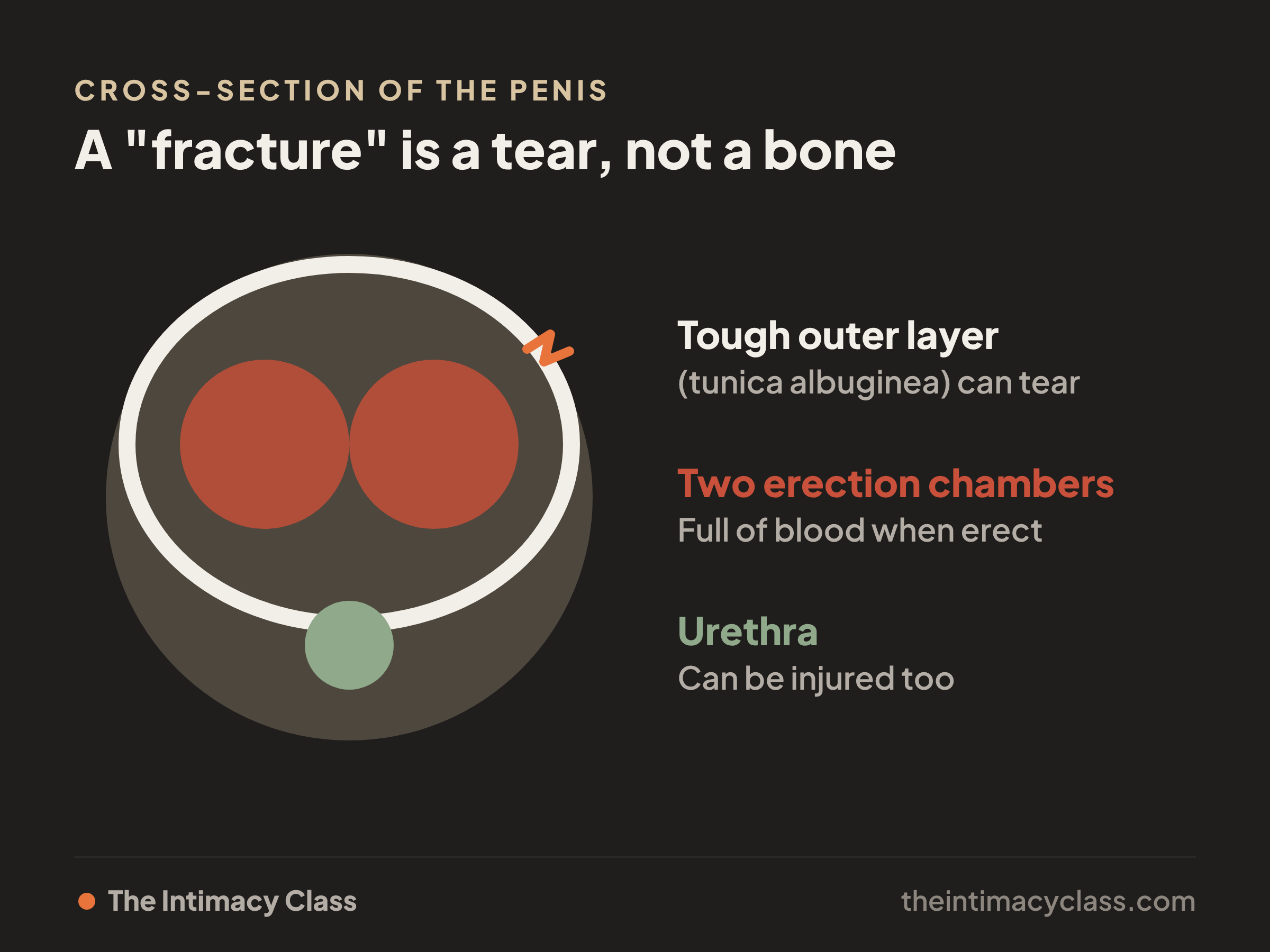
There's no bone in the penis. A "fracture" means a tear in the tunica albuginea, the tough, elastic layer that surrounds the two erection chambers (the corpora cavernosa). When the penis is erect, these chambers are full of blood under pressure. If the erect penis is suddenly bent with force, this layer can tear.
Common causes
- Sex, most often when the penis slips out and hits the partner's pubic bone or perineum during a strong thrust
- Positions where the partner is on top or the man is behind, which make sudden bending more likely
- Forceful bending or rolling over onto an erect penis
- Vigorous masturbation
The signs: know them
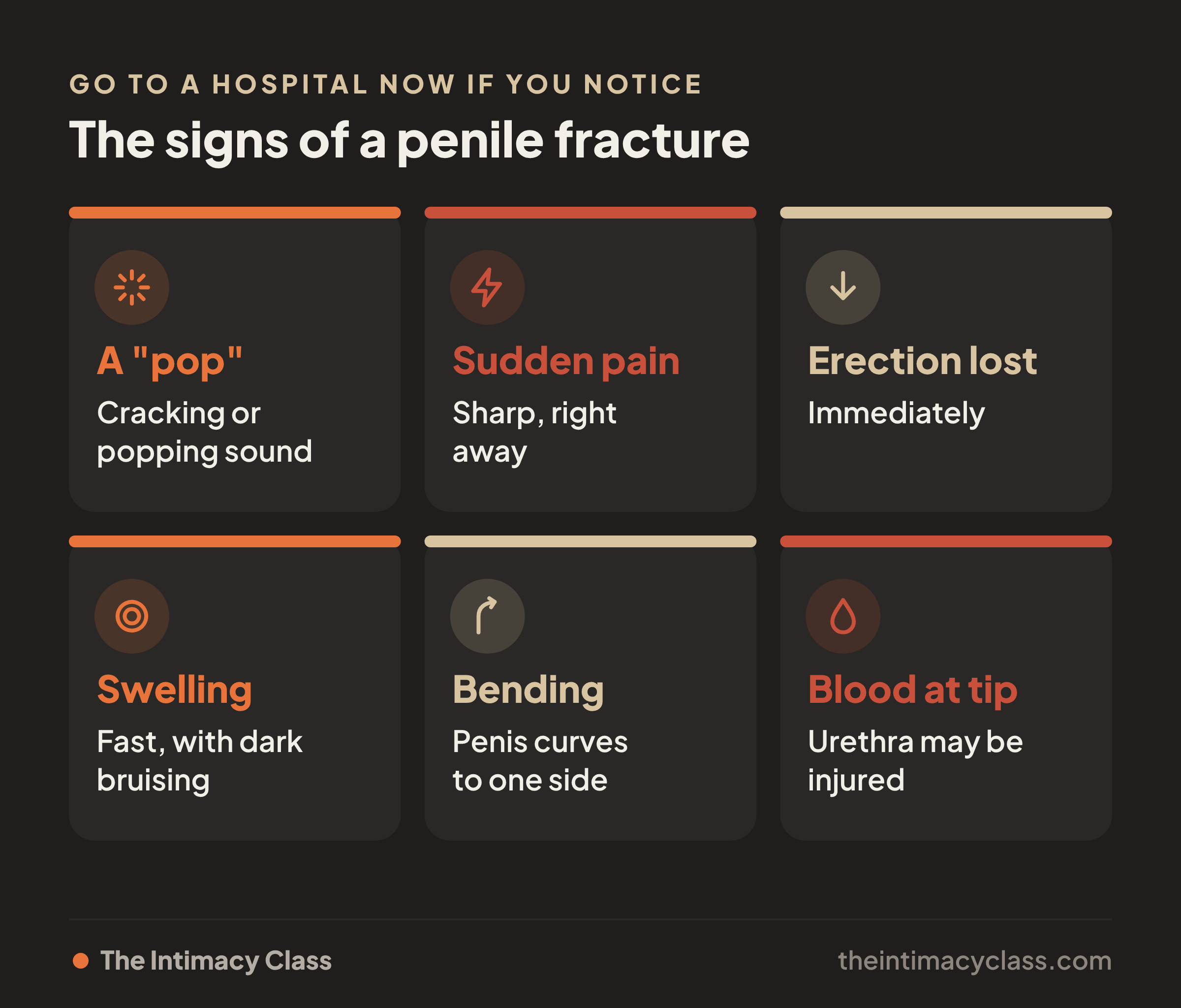
- A popping or cracking sound
- Sudden pain
- Immediate loss of erection
- Rapid swelling and dark bruising, which can make the penis look purple and swollen (sometimes called an "eggplant" deformity)
- The penis may bend to one side
- Blood at the tip or difficulty peeing, which can mean the urethra is also injured
Why the first 24 hours matter
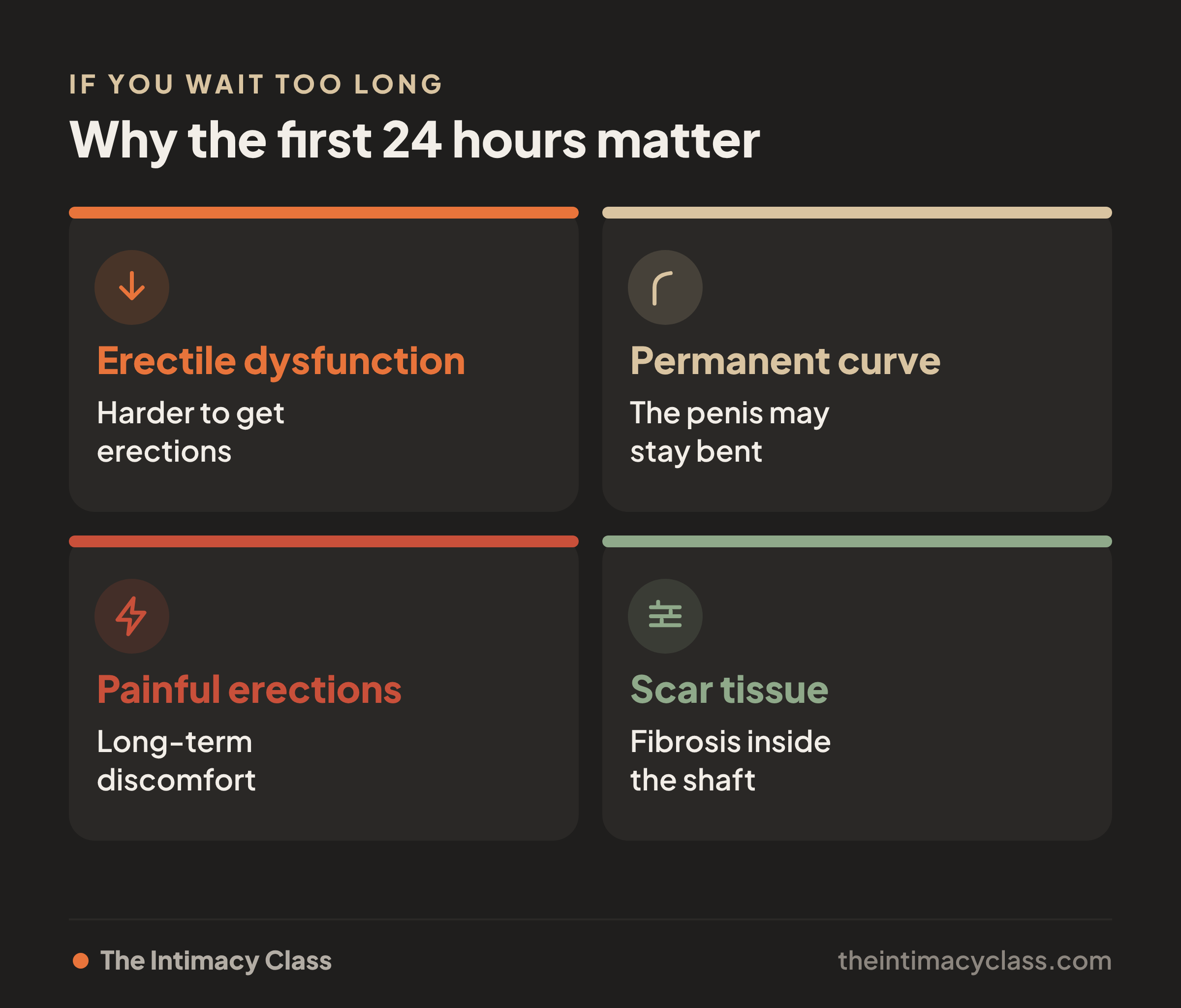
The biggest mistake is waiting at home, hoping the swelling will go down. Research shows that early surgical repair, ideally within 24 hours, leads to better outcomes and lowers the risk of long-term problems such as:
- Erectile dysfunction
- A permanent curve in the penis
- Painful erections
- Scar tissue (fibrosis)
Ice packs or painkillers are not a treatment. Embarrassment shouldn't stop you: urologists treat this injury regularly.
What to do if it happens
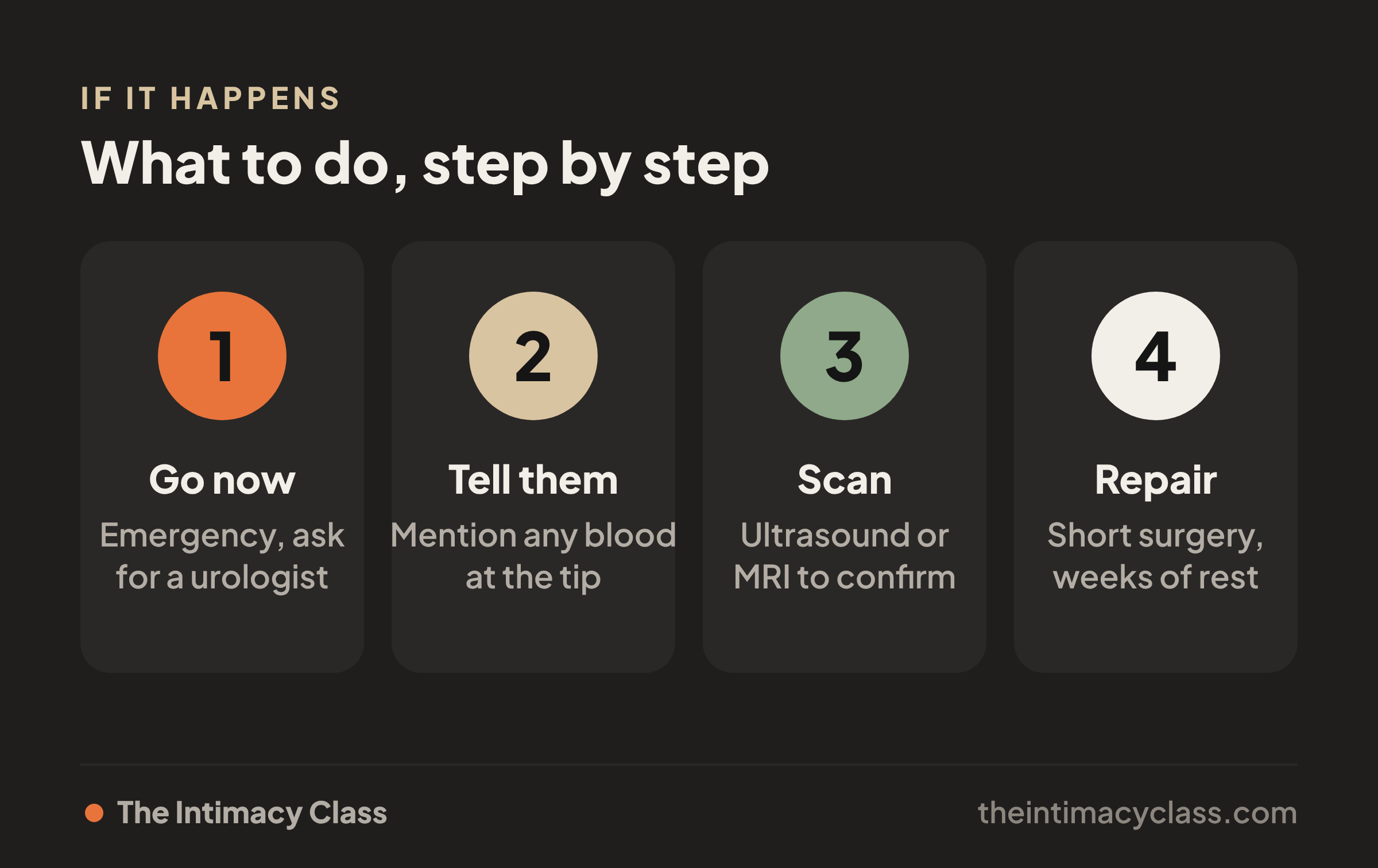
- Go to the emergency department immediately. Ask for a urologist.
- Don't try to pee forcefully if there's blood at the tip; tell the doctor.
- The doctor may confirm it with an ultrasound or MRI.
- Treatment is usually a short surgery to repair the tear, followed by a few weeks without sexual activity.
How to lower the risk
- Go slower, especially in positions with a partner on top or from behind.
- Use enough lubrication, so the penis is less likely to slip out.
- Be careful when changing positions.
- Communicate with your partner if things are getting too rough.
After recovery
Most men return to normal sexual function after proper treatment. Some feel anxious about sex afterwards, which is natural. A urologist can answer questions about healing, and a sexologist or therapist can help with confidence and performance anxiety. You can book a private online session with a verified expert on The Intimacy Class.
FAQs
Can a penile fracture heal on its own? Small injuries are sometimes managed without surgery, but only a doctor can decide this. Delaying treatment increases the risk of lasting problems.
Is a penile fracture common? It's rare but not unusual. Many cases likely go unreported because of embarrassment.
Will I be able to have sex again? Yes, most men recover fully with prompt treatment. Doctors usually advise waiting about 4 to 6 weeks.
Key takeaways
- A popping sound, sudden loss of erection, swelling and bruising mean a possible penile fracture.
- It's a medical emergency. Go to a hospital and ask for a urologist right away.
- Early repair, ideally within 24 hours, protects future erections.
- For questions about recovery or confidence, talk to a verified expert.
This article is for education only and isn't a substitute for medical advice.