Sexual health · 6 min read
Swallowing Semen: Is It Safe? What It Contains and the Real Risks
Swallowing semen is safe for most people and can't cause pregnancy. Learn what semen contains, the myths about protein, and the real STI risk.

The Intimacy Class Editorial
Whether to swallow semen during oral sex is a personal choice, and it should always be the choice of the person giving oral sex. If you're wondering whether it's safe, here are the facts: swallowing semen is generally safe for healthy people, it cannot cause pregnancy, and it has no real health benefits. The only real concern is STIs.
What's in semen?
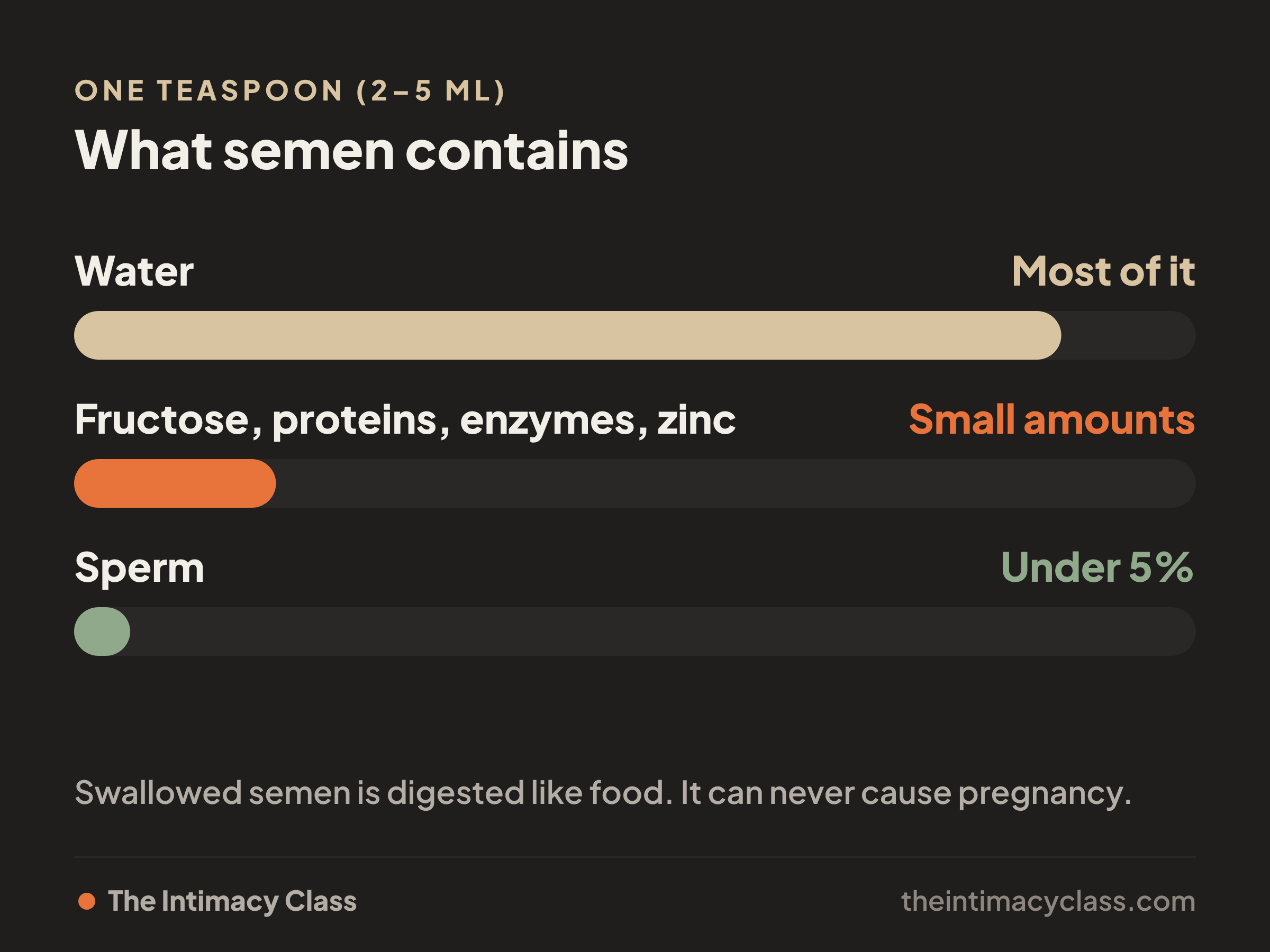
A typical ejaculation is only about 2 to 5 ml, roughly one teaspoon. It is mostly fluid from the seminal vesicles and prostate, and it contains:
- Water: the majority.
- Fructose: a sugar that gives sperm energy.
- Proteins and enzymes: in small amounts.
- Zinc and citric acid: from the prostate.
- Sperm: usually less than 5% of the volume.
Myth: "Semen is full of protein"
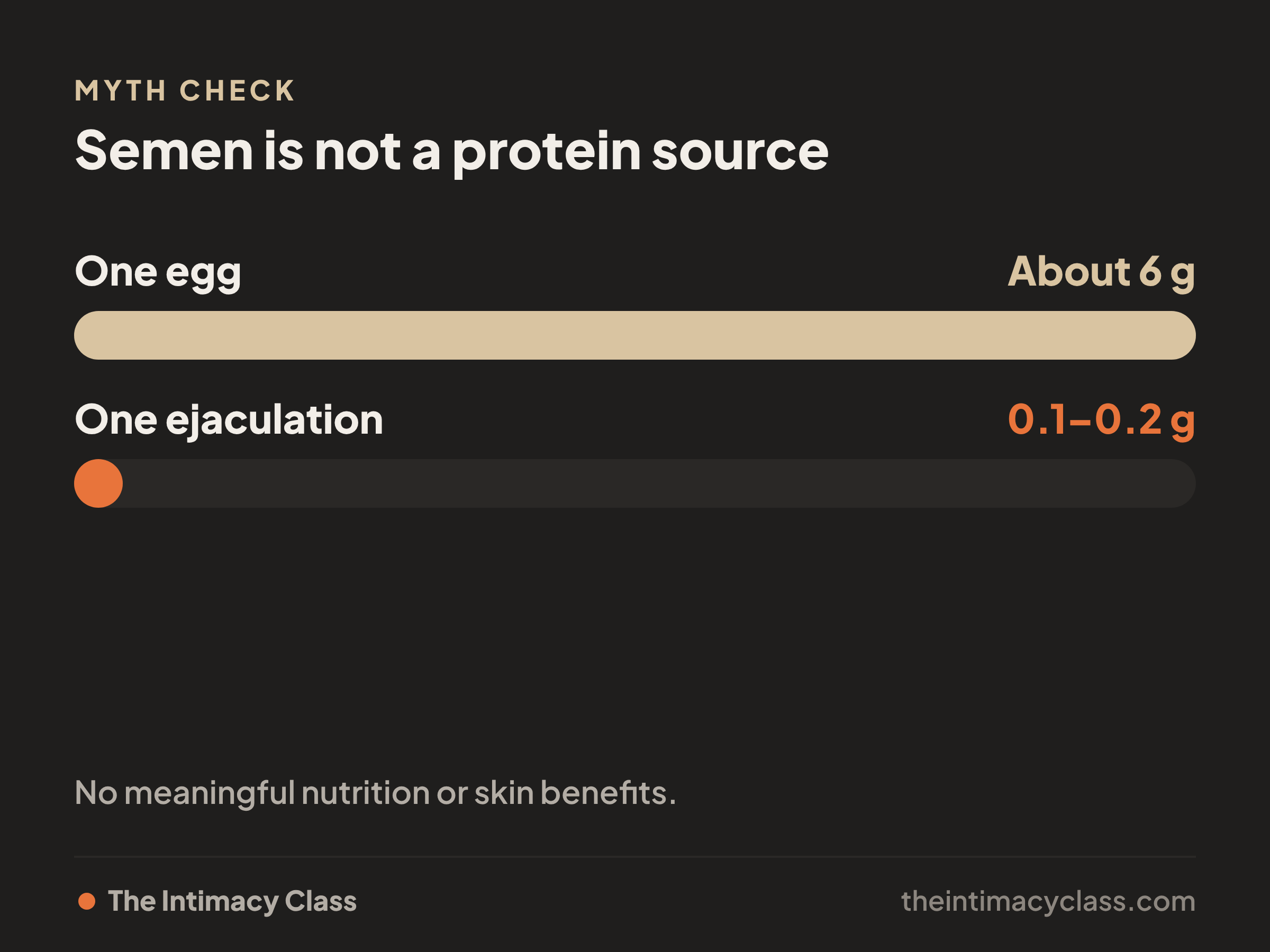
Semen contains very little protein: about 0.1 to 0.2 grams per ejaculation. An egg has about 6 grams. It has only a few calories too. Swallowing semen has no meaningful nutritional or skin benefits.
Can swallowing cause pregnancy?
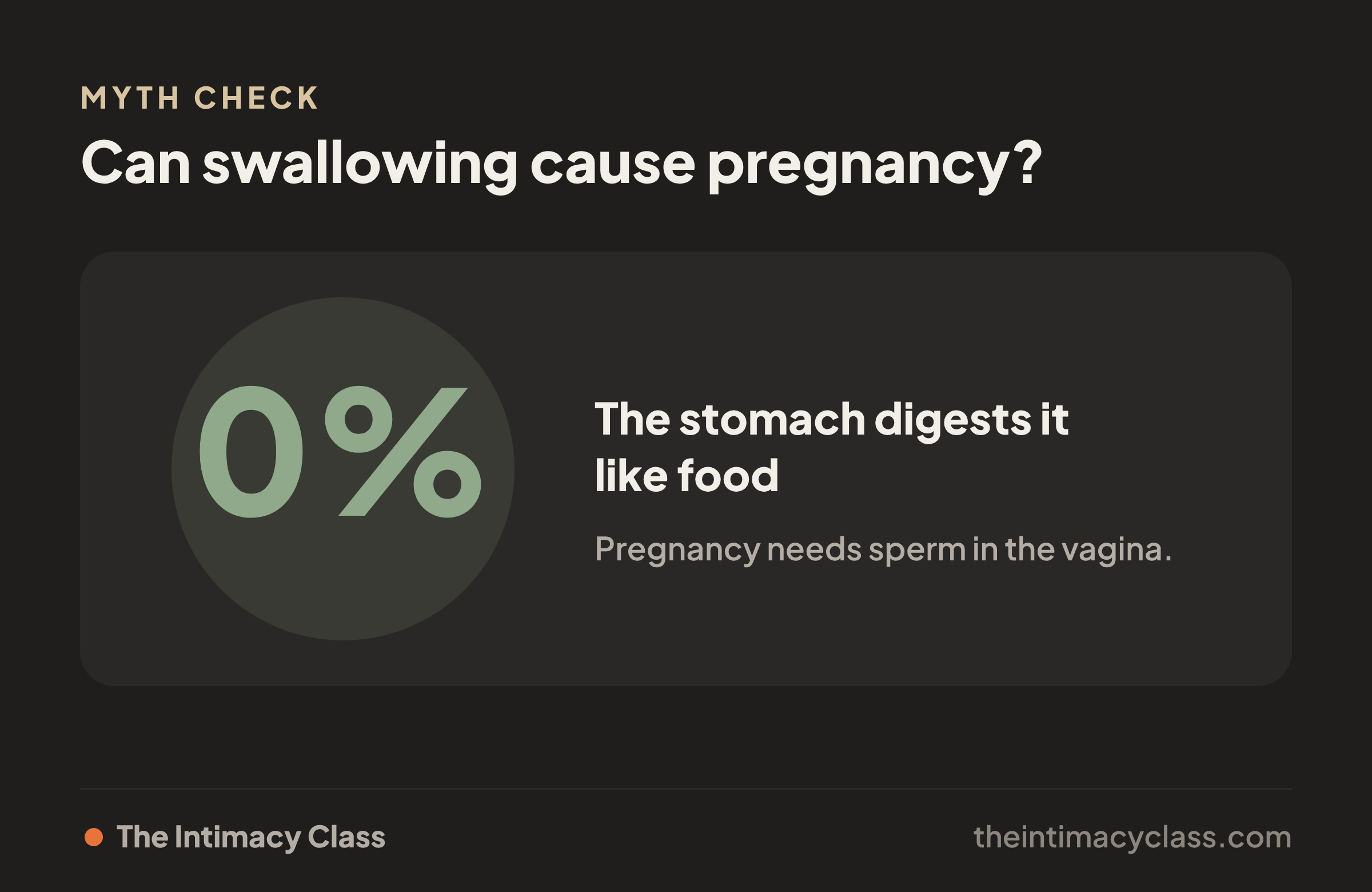
No, never. The mouth leads to the digestive system, and the stomach digests semen like food. Pregnancy is only possible when sperm enter the vagina.
The real risk: STIs
Infections can pass through oral sex because the mouth comes into contact with semen, pre-ejaculate and genital skin. This includes gonorrhoea, chlamydia, syphilis, herpes and HPV, and a low but real risk of HIV, especially with mouth ulcers or bleeding gums.
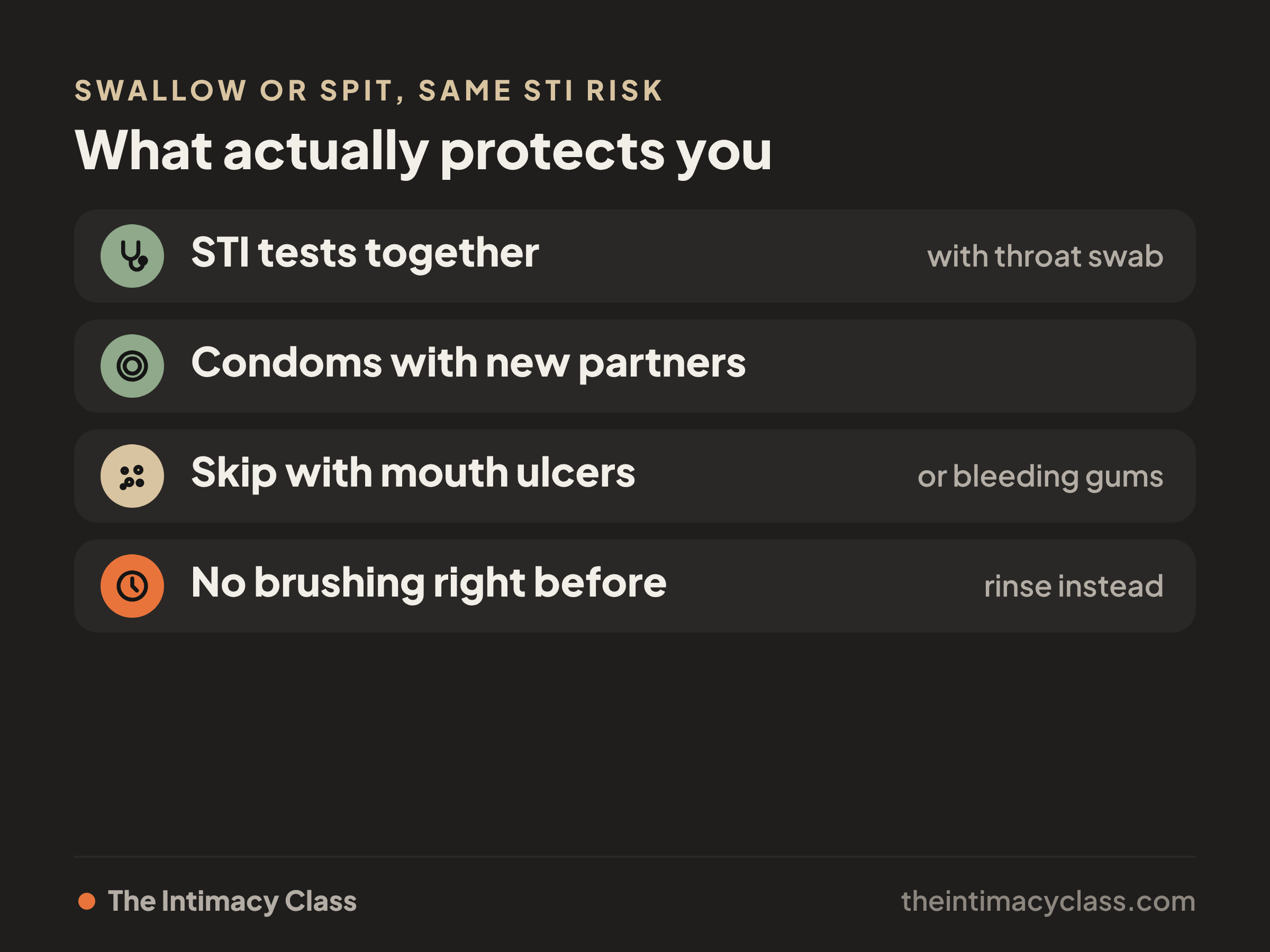
An important point: swallowing or spitting carries about the same risk. The exposure happens in the mouth. So the real protection is:
- STI testing for both partners, including a throat swab
- Condoms for oral sex with new or untested partners
- Avoiding oral sex when there are mouth ulcers, cuts, bleeding gums or a sore throat
- Not brushing or flossing right before oral sex
Is a semen allergy possible?
Yes, though it's rare. Seminal plasma hypersensitivity is an allergy to proteins in semen. It can cause itching, swelling or hives after contact. If you notice this, see a doctor.
Taste and comfort
Semen usually tastes slightly salty, bitter or sweet. Some people dislike the taste or texture, and that's completely fine. Spitting, swallowing, or not having ejaculation in the mouth at all are all equally valid choices. Partners should agree on this beforehand, without pressure.
When to see a doctor
- A sore throat lasting more than a week after oral sex with a new partner
- Sores, blisters or white patches in the mouth
- Swelling, itching or hives after contact with semen
For private questions about sexual health or STIs, you can book an online session with a verified sexologist or doctor on The Intimacy Class.
FAQs
Does swallowing semen have health benefits? No meaningful ones. The amounts of protein and minerals are too small to matter.
Is spitting safer than swallowing? Not really. STI exposure happens in the mouth either way.
Can pre-ejaculate carry STIs? Yes. Pre-ejaculate can carry infections like gonorrhoea, chlamydia and HIV.
Can you get HIV from swallowing semen? The risk is low but not zero. It rises if there are mouth ulcers, bleeding gums or a recent dental procedure. If HIV is a concern, testing and condoms are the reliable protection, and a doctor can advise about PrEP.
Why does semen taste different sometimes? Hydration, diet and how long it has been since the last ejaculation can change taste and texture a little. A sudden strong smell, or blood in semen, is worth checking with a doctor.
Key takeaways
- Swallowing semen is generally safe and can't cause pregnancy.
- It contains very little protein, so there are no real health benefits.
- STI risk is about the same whether you swallow or spit. Testing and condoms protect you.
- It's always the choice of the person giving oral sex.
- For personal sexual health questions, speak to a verified expert.
This article is for education only and isn't a substitute for medical advice.