Sexual health · 7 min read
Is Oral Sex Dirty? The Science of Hygiene and STI Risk
Is oral sex unhygienic? Learn what science says about genital hygiene, which STIs can spread through oral sex, and how to protect yourself.

The Intimacy Class Editorial
Oral sex is common, yet many people still feel that it's "dirty" or unhygienic. Some are happy to receive it but uncomfortable giving it. So what does science actually say? The short answer: a healthy, clean body is not dirty. The real thing to think about isn't hygiene, it's STI risk, and that applies equally to everyone involved.
Are genitals dirtier than the mouth?
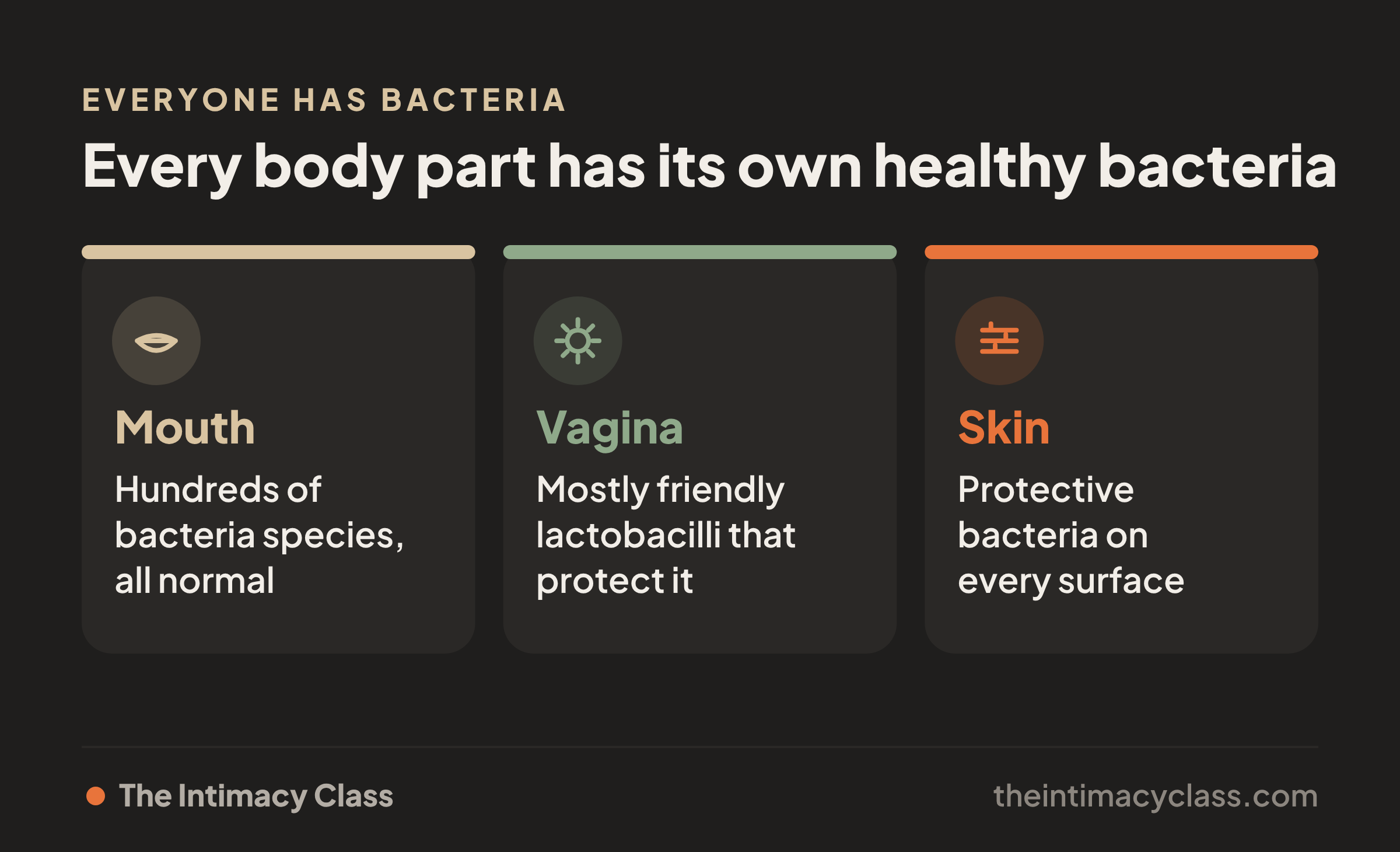
Not really. Every part of the body has its own normal community of bacteria, called the microbiome. The mouth has hundreds of species of bacteria. The vagina is dominated by healthy lactobacilli that keep it slightly acidic and protected. The penis and vulva, with normal daily washing, are no "dirtier" than the mouth.
What makes a body part unhygienic is poor washing or an infection, not the body part itself.
The real risk: STIs
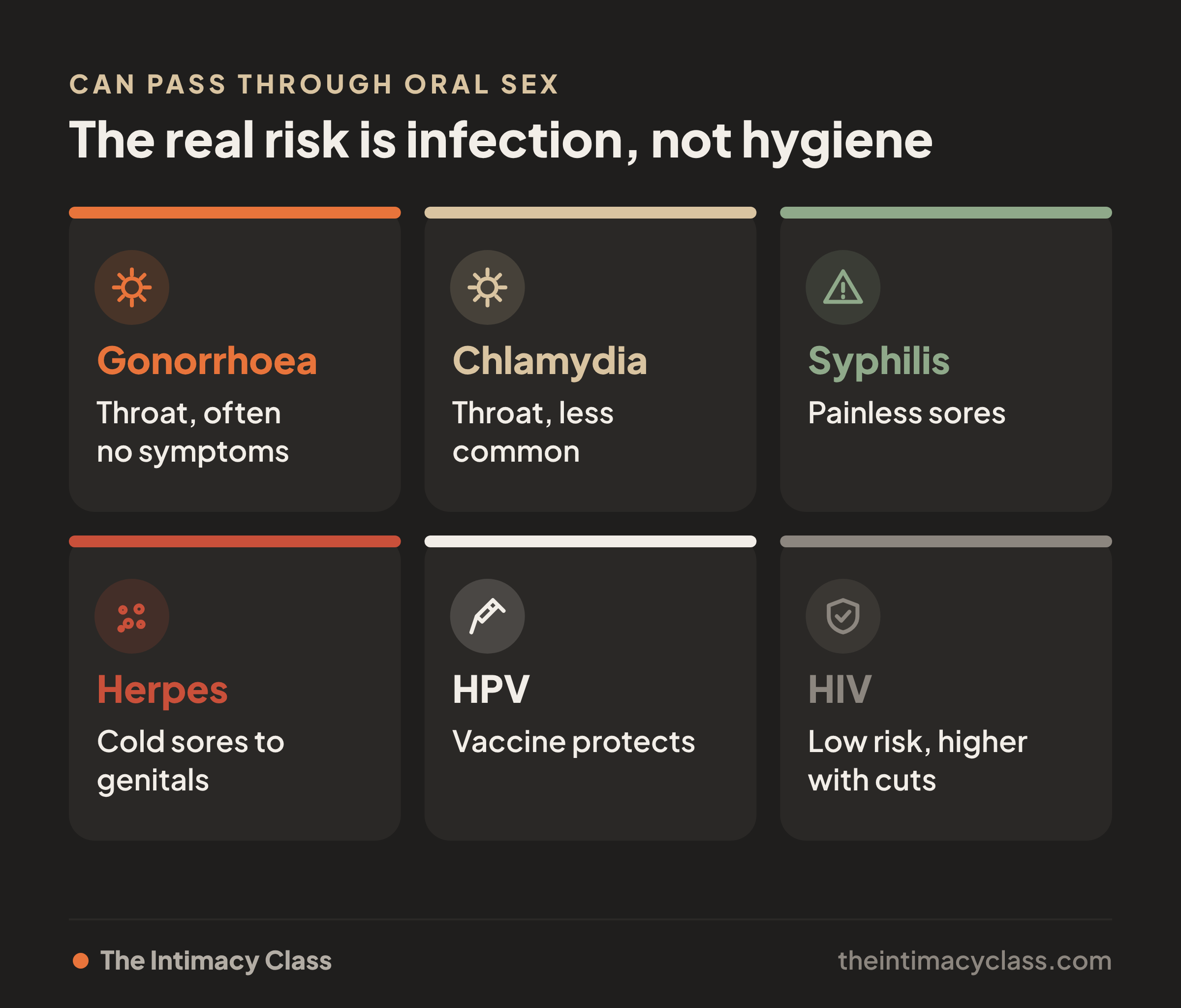
Oral sex can pass on sexually transmitted infections in both directions, from genitals to mouth and from mouth to genitals. The main ones are:
- Gonorrhoea: can infect the throat, usually with no symptoms.
- Chlamydia: can infect the throat, less commonly than gonorrhoea.
- Syphilis: spreads through contact with painless sores on the mouth or genitals.
- Herpes (HSV-1 and HSV-2): cold sores on the mouth can pass herpes to the genitals during oral sex.
- HPV: can spread through oral sex, and some types are linked to throat cancers. A vaccine protects against the most harmful types.
- HIV: the risk through oral sex is low, but not zero, especially if there are cuts, sores or bleeding gums.
A key point: throat infections often show no symptoms at all, so people can pass them on without knowing.
How to make oral sex safer
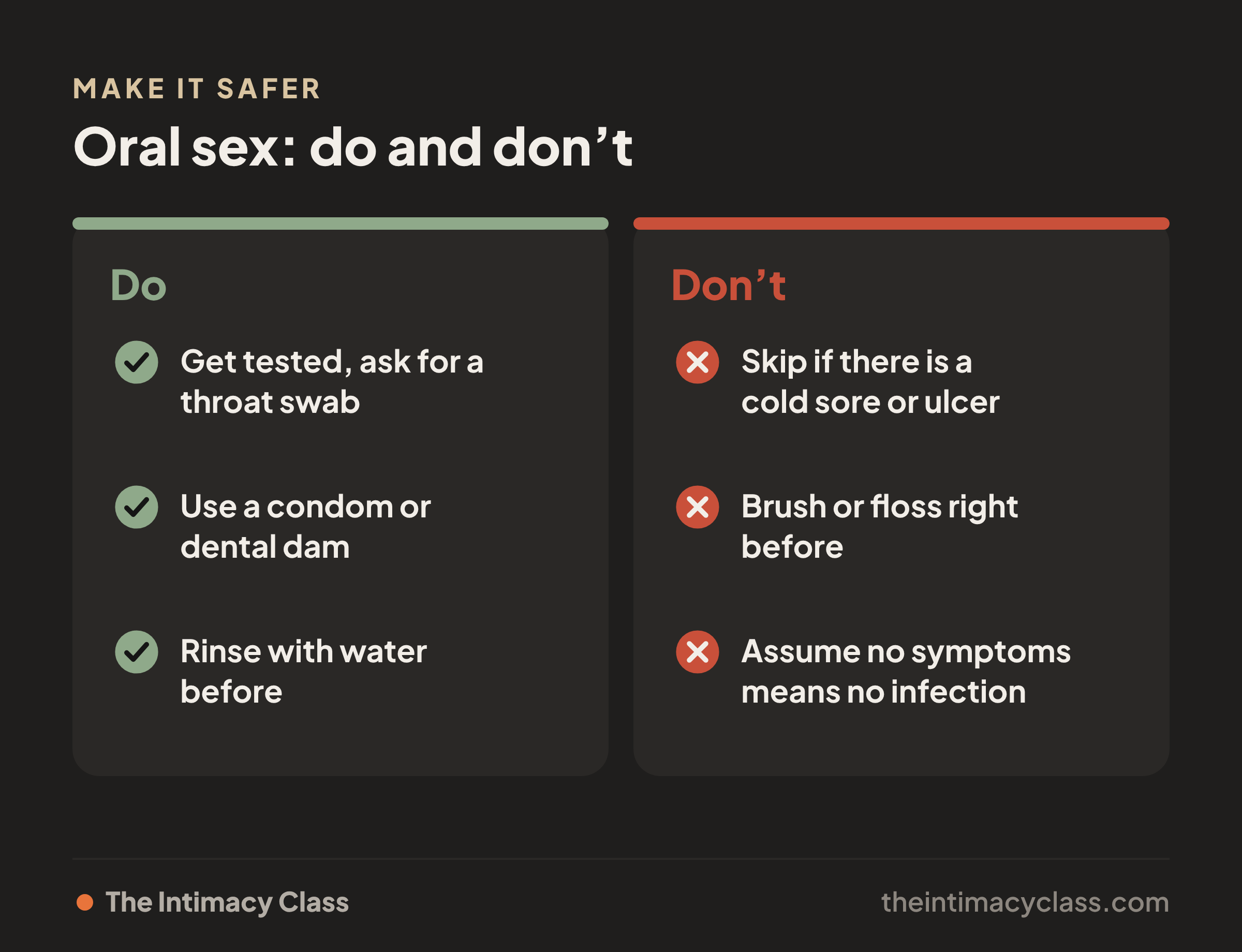
- Get tested together, and ask for a throat swab as well as the usual tests if you have oral sex. Routine tests don't always check the throat.
- Use a condom for oral sex on a penis, or a dental dam (a thin latex sheet) for oral sex on a vulva or anus.
- Skip oral sex if either of you has a cold sore, mouth ulcer, cut, bleeding gums or a sore throat.
- Don't brush or floss right before oral sex. It can cause tiny cuts in the gums. Rinse with water instead.
- Wash before and after. Plain water and mild soap on the outer skin is enough.
The "dirty" double standard
Many people are happy to receive oral sex but call it "dirty" when it comes to giving it, or refuse to kiss their partner afterwards. Biologically, the risk is the same whoever gives and whoever receives, and a partner's own fluids aren't harmful to them. Understanding the science helps couples talk about it honestly and decide together what they're both comfortable with.
When to see a doctor
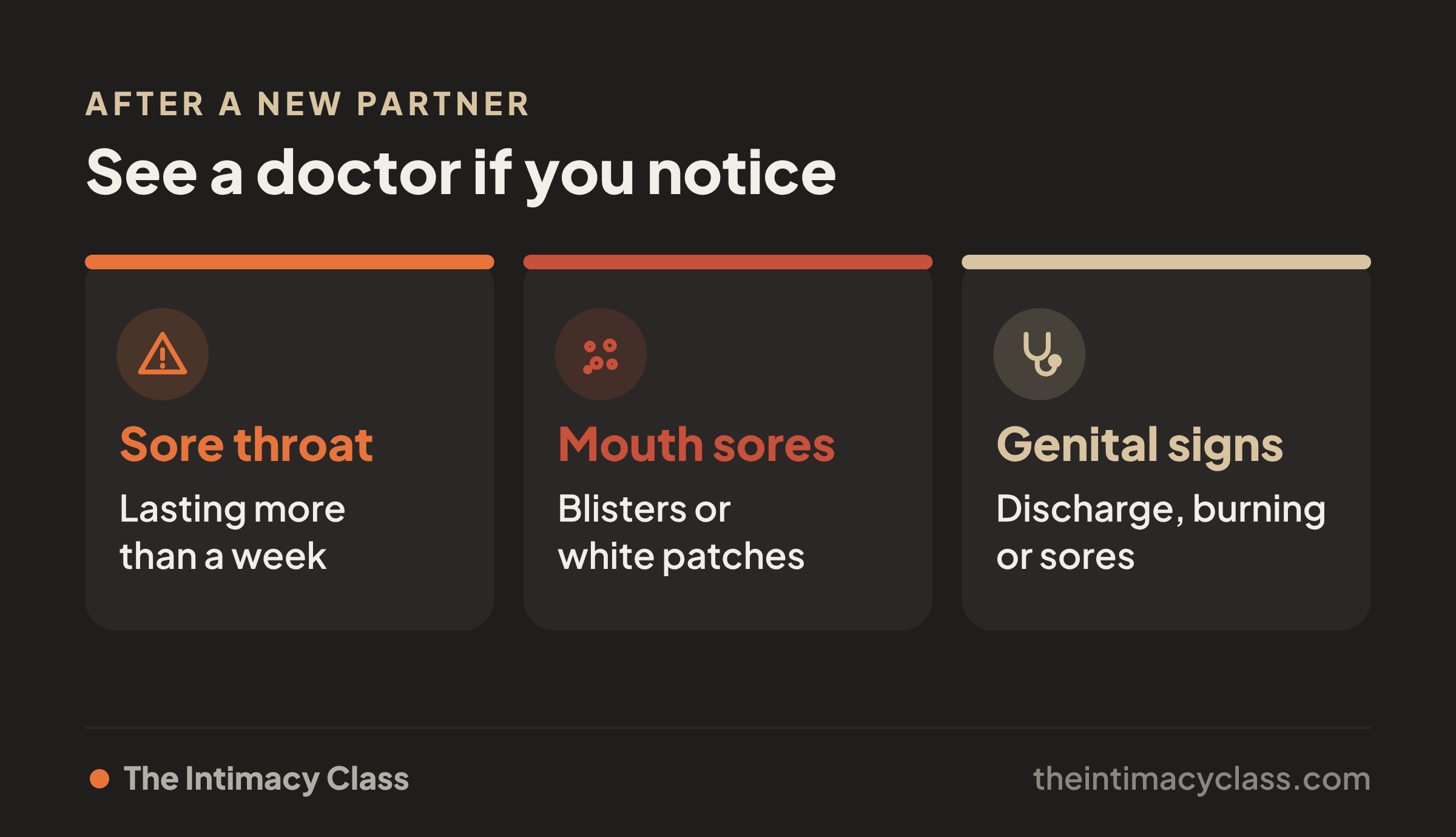
See a doctor if, after oral sex with a new partner, you notice:
- A sore throat that lasts more than a week
- Sores, blisters or white patches in the mouth
- Unusual discharge, burning when you pee, or genital sores
If you'd like to talk this through privately first, you can book an online session with a verified sexologist or doctor on The Intimacy Class.
FAQs
Can you get an STI from oral sex if there's no ejaculation? Yes. Infections like herpes, syphilis and HPV spread through skin contact, and gonorrhoea can spread through pre-ejaculate or genital contact.
Does mouthwash protect against STIs? Not reliably. Some studies suggest certain mouthwashes may reduce throat bacteria briefly, but mouthwash is not protection.
Is oral sex safer than intercourse? It carries no pregnancy risk and a lower HIV risk, but most other STIs can still spread.
Key takeaways
- A clean, healthy body isn't dirty. The real issue is STI risk.
- Oral sex can pass on gonorrhoea, syphilis, herpes, HPV and more, often without symptoms.
- Testing (including a throat swab), condoms and dental dams protect both partners.
- For personal questions, talk to a verified expert privately.
This article is for education only and isn't a substitute for medical advice.