Pleasure · 7 min read
How to Help a Woman Orgasm: What Science Says About the Clitoris
Only about 18% of women orgasm from intercourse alone. Learn how the clitoris works, why communication matters, and what actually helps.

The Intimacy Class Editorial
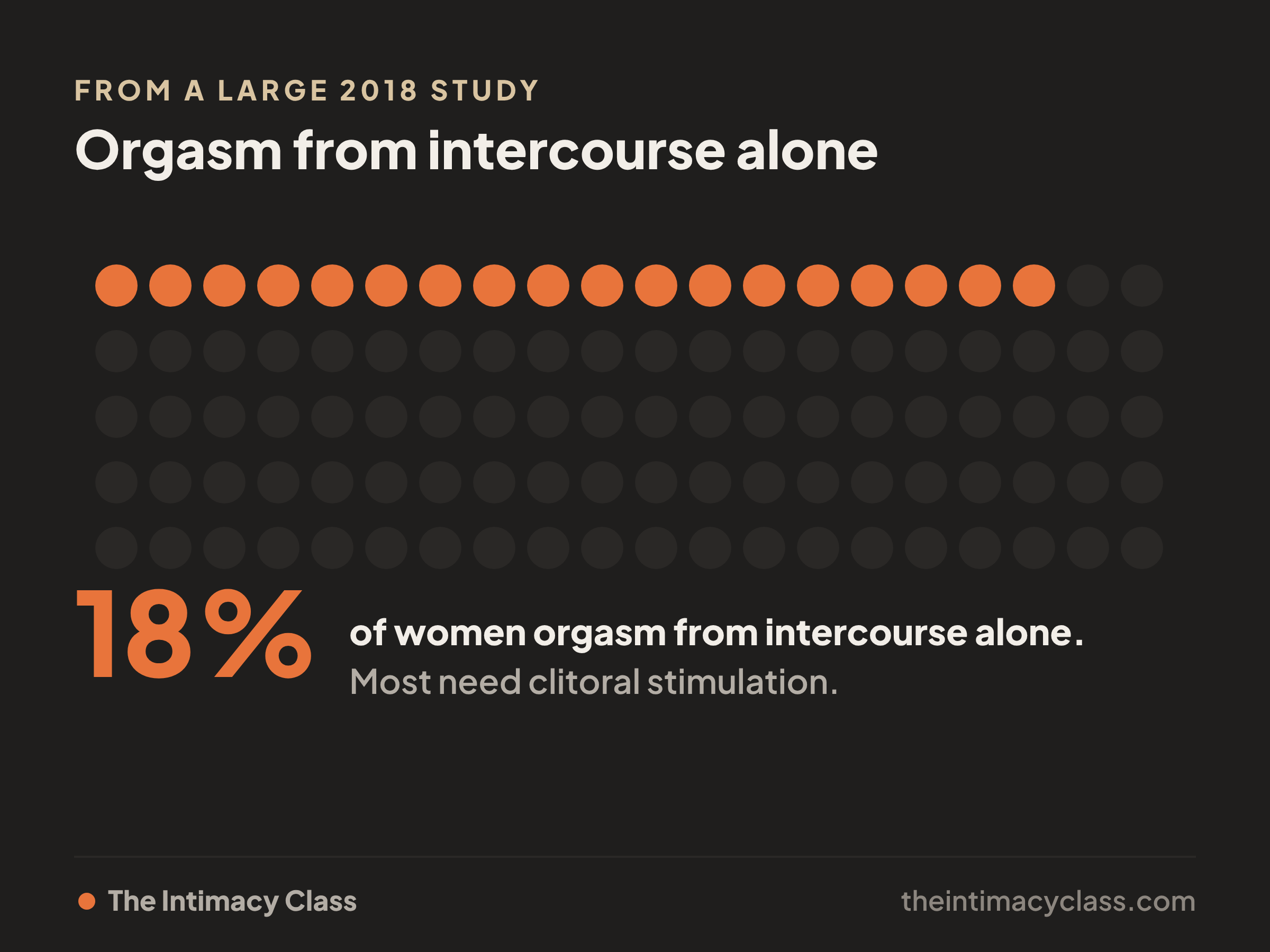
Many couples believe that if a woman doesn't orgasm during intercourse, something is wrong. Science says otherwise. In a large study published in 2018, only about 18% of women said intercourse alone was enough for them to orgasm. Most women need clitoral stimulation. So if orgasm doesn't happen through penetration, the problem isn't her body. It's usually the approach.
Meet the clitoris
The clitoris is the only organ in the human body whose sole purpose is pleasure.
- The visible part (the glans) is small, at the top of the vulva where the inner lips meet.
- It has thousands of nerve endings. Estimates range from about 8,000 to over 10,000, more than any other part of the body of its size.
- Most of the clitoris is internal. Its body and two "legs" extend about 9 to 11 cm inside, wrapping around the vaginal opening.
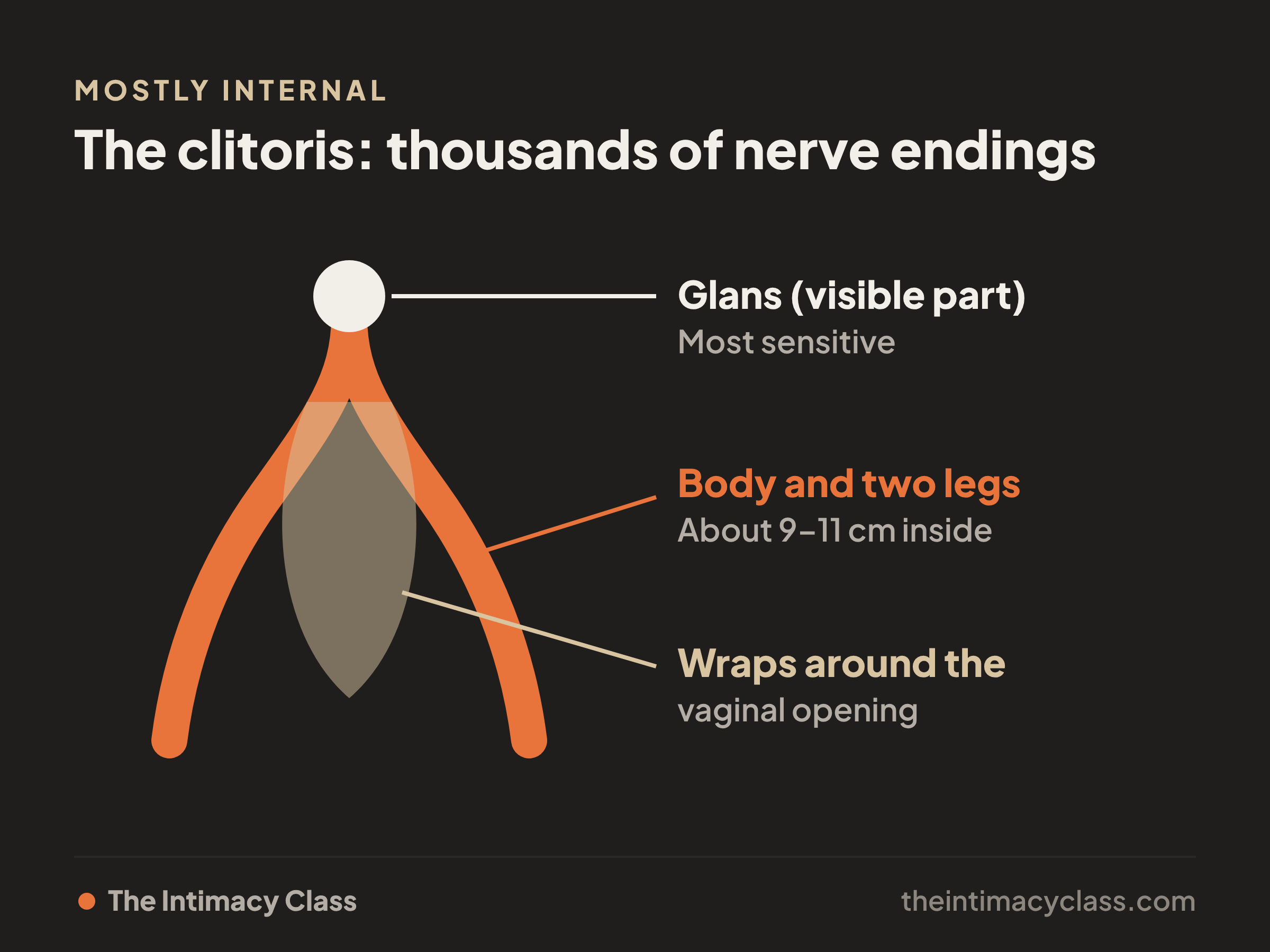
This is why stimulation of the outer clitoris, and the area around it, matters so much.
What actually helps
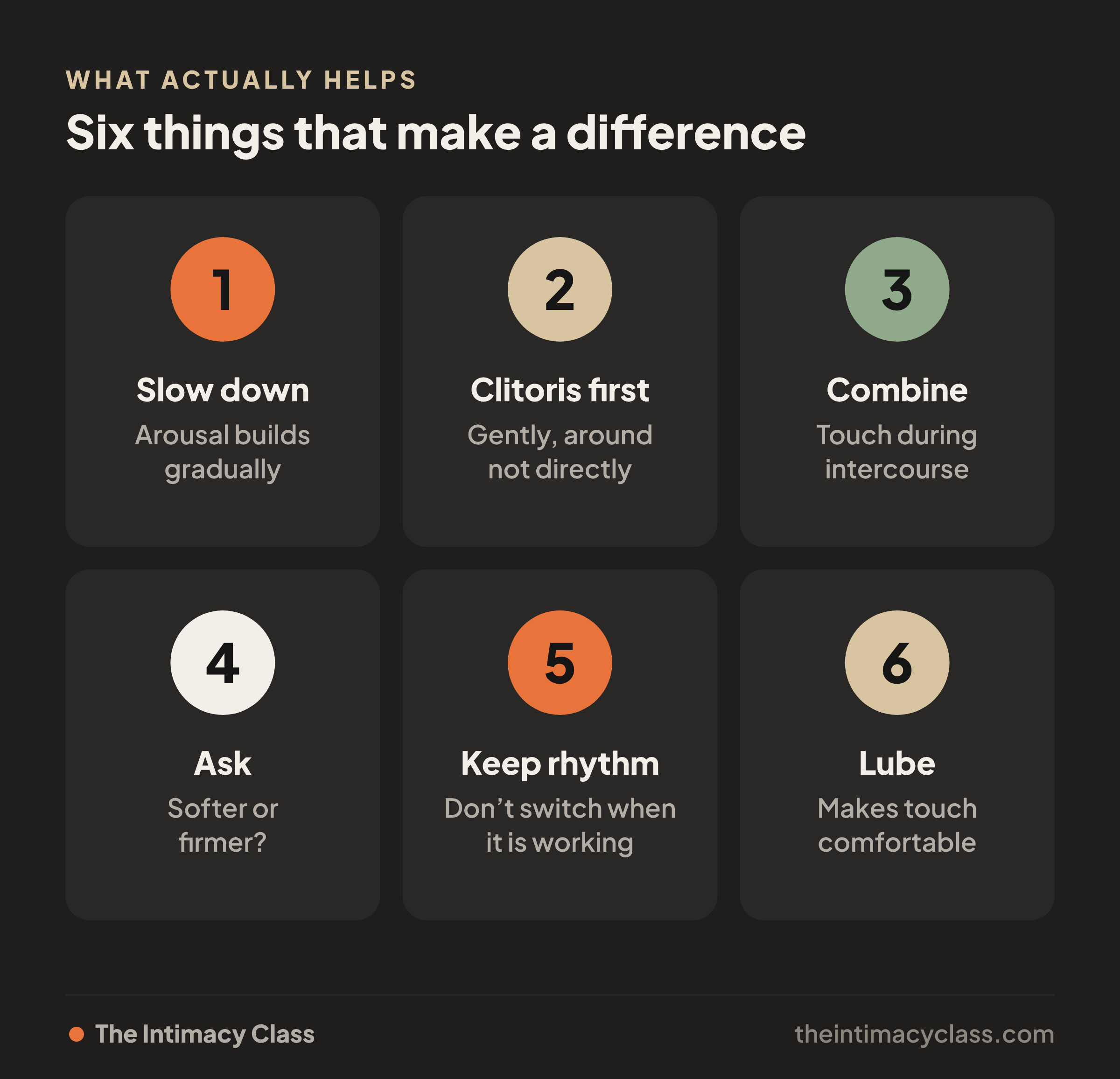
1. Slow down. Arousal in women often builds more gradually. Kissing, touching and foreplay help blood flow to the clitoris and vulva, which makes them more sensitive.
2. Focus on the clitoris. Use fingers, the tongue or a toy. Start gently and around the clitoris rather than directly on it, since the glans can be very sensitive.
3. Combine. During intercourse, adding clitoral stimulation (with a hand or toy) or choosing positions where she controls the angle, such as woman on top, makes orgasm more likely.
4. Ask what feels good. Every body is different. Simple questions like "softer or firmer?" or "faster or slower?" help more than any technique.
5. When something works, don't change it. A common mistake is speeding up or switching technique just when it's working. Keep the same rhythm and pressure.
6. Lubrication helps. Natural or added lube makes touch more comfortable and pleasurable.
The pressure problem
Stress and pressure are the biggest barriers to orgasm. Worrying about "performing", or feeling that orgasm is a test, makes it harder for both partners. Trust and comfort are the real foreplay. Orgasm doesn't have to be the goal every time. Intimacy can be enjoyable without it.
Why some women find orgasm difficult
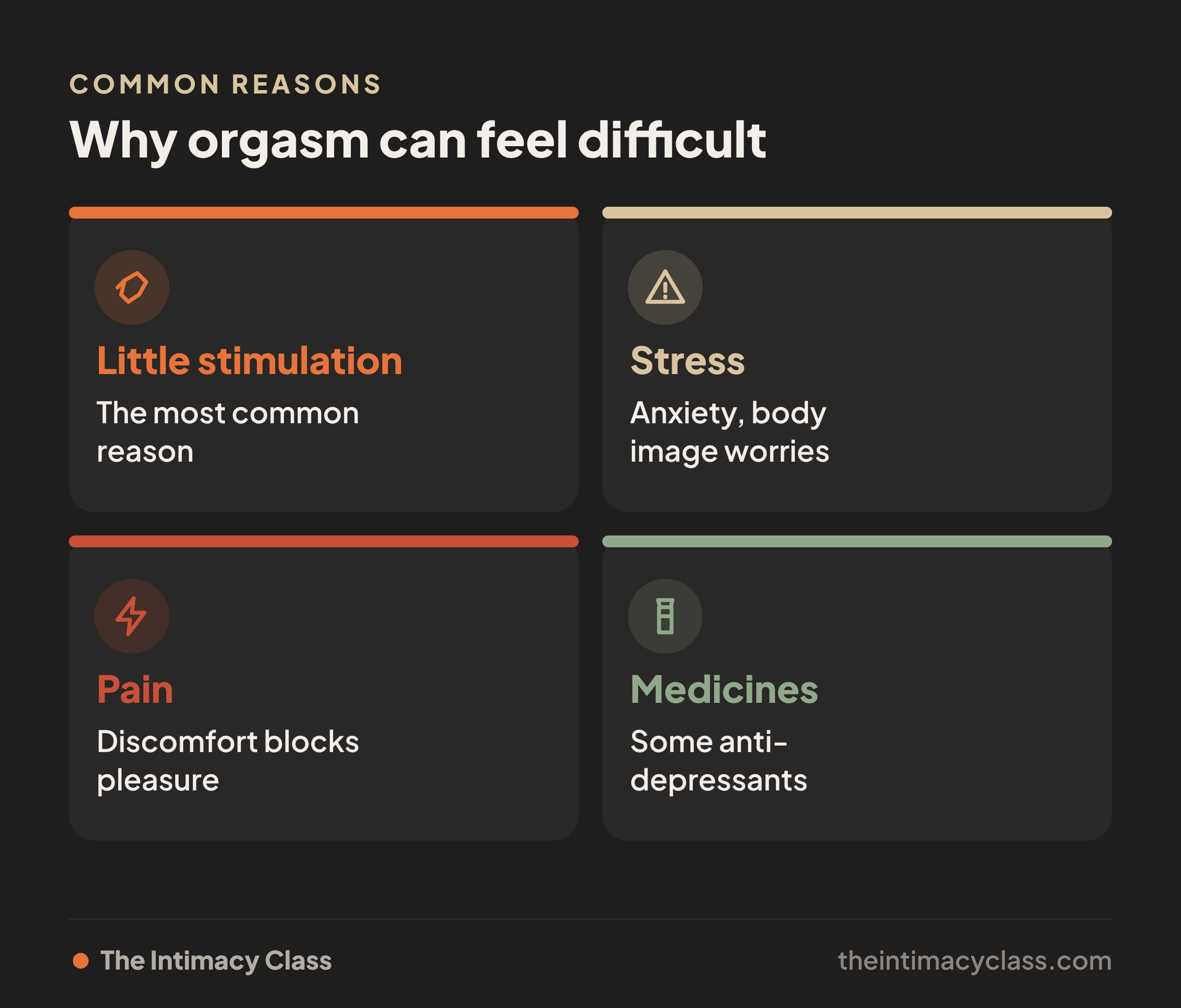
- Not enough clitoral stimulation (the most common reason)
- Stress, anxiety or body image worries
- Pain during sex
- Some medicines, such as certain antidepressants
- Relationship issues or past negative experiences
Difficulty with orgasm that causes distress is called anorgasmia, and it's treatable. A sexologist or sex therapist can help with practical, personal guidance. You can book a private online session with a verified expert on The Intimacy Class.
FAQs
Is it normal not to orgasm from penetration? Yes. Most women don't orgasm from intercourse alone. It's completely normal.
What is the G-spot? It's an area on the front wall of the vagina that some women find sensitive. Many researchers believe its sensitivity comes from the internal parts of the clitoris.
Can women have multiple orgasms? Some can, because many women don't have the same recovery period as men. It varies from person to person.
How long does it usually take? There's no normal time. Studies suggest many women need around 10 to 20 minutes of arousal and stimulation, and it often varies day to day. Patience matters more than speed.
Key takeaways
- Only about 18% of women orgasm from intercourse alone.
- The clitoris, with thousands of nerve endings, is central to female pleasure.
- Slow down, focus on clitoral stimulation, ask what feels good, and keep doing what works.
- No pressure. If orgasm is difficult, a verified sexologist or therapist can help.
This article is for education only and isn't a substitute for medical advice.