Contraception · 6 min read
Can You Get Pregnant on Your Period? What Science Says
Yes, you can get pregnant on your period. Learn how sperm survival, short cycles and ovulation make it possible, and what to do if a condom slips.
The Intimacy Class Editorial
Many couples treat period days as "safe days". It sounds logical: if the body is shedding its lining, how could a pregnancy start? But the short answer is yes, you can get pregnant from sex during your period. The chance is lower than at other times of the month, but it is not zero, and for some people it is higher than they think.
Why period sex isn't automatically safe
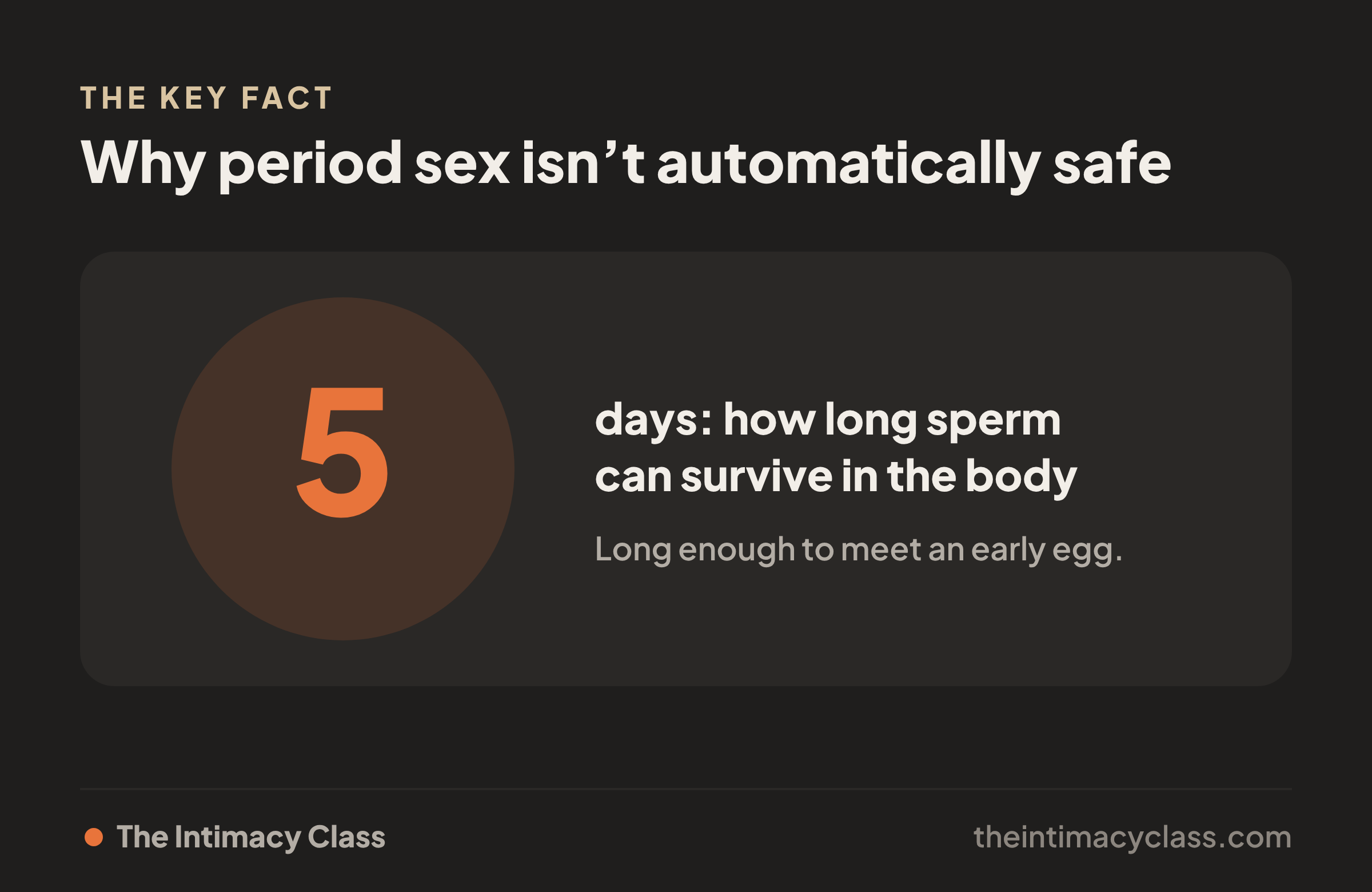
Pregnancy doesn't depend on the day you have sex. It depends on whether sperm are still alive when an egg is released. Two facts make period pregnancy possible:
- Sperm can survive inside the body for up to 5 days. Fertile cervical mucus protects them and helps them move.
- Ovulation doesn't always happen in the middle of the cycle. In a 28-day cycle it usually happens around day 14. In a shorter cycle, it can happen much earlier.
The short-cycle example
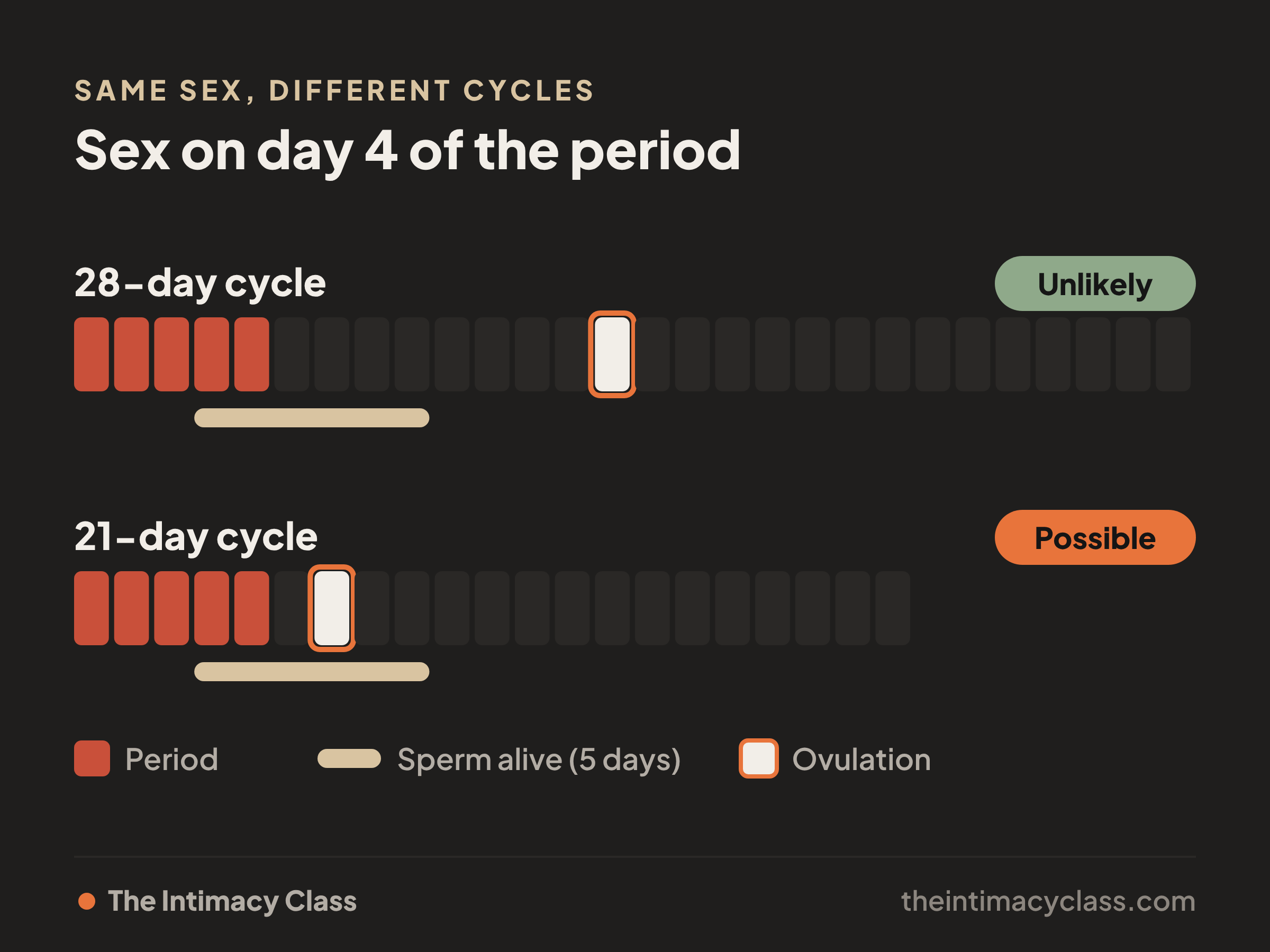
Imagine two people who both have sex on day 4 of their period.
- 28-day cycle: sperm survive until about day 9. Ovulation happens around day 14. The sperm and egg never meet, so pregnancy is unlikely.
- 21-day cycle: ovulation can happen around day 7. Sperm from day 4 are still alive and waiting. Pregnancy is possible.
This is why period sex is riskier for people with short cycles.
Who has a higher chance
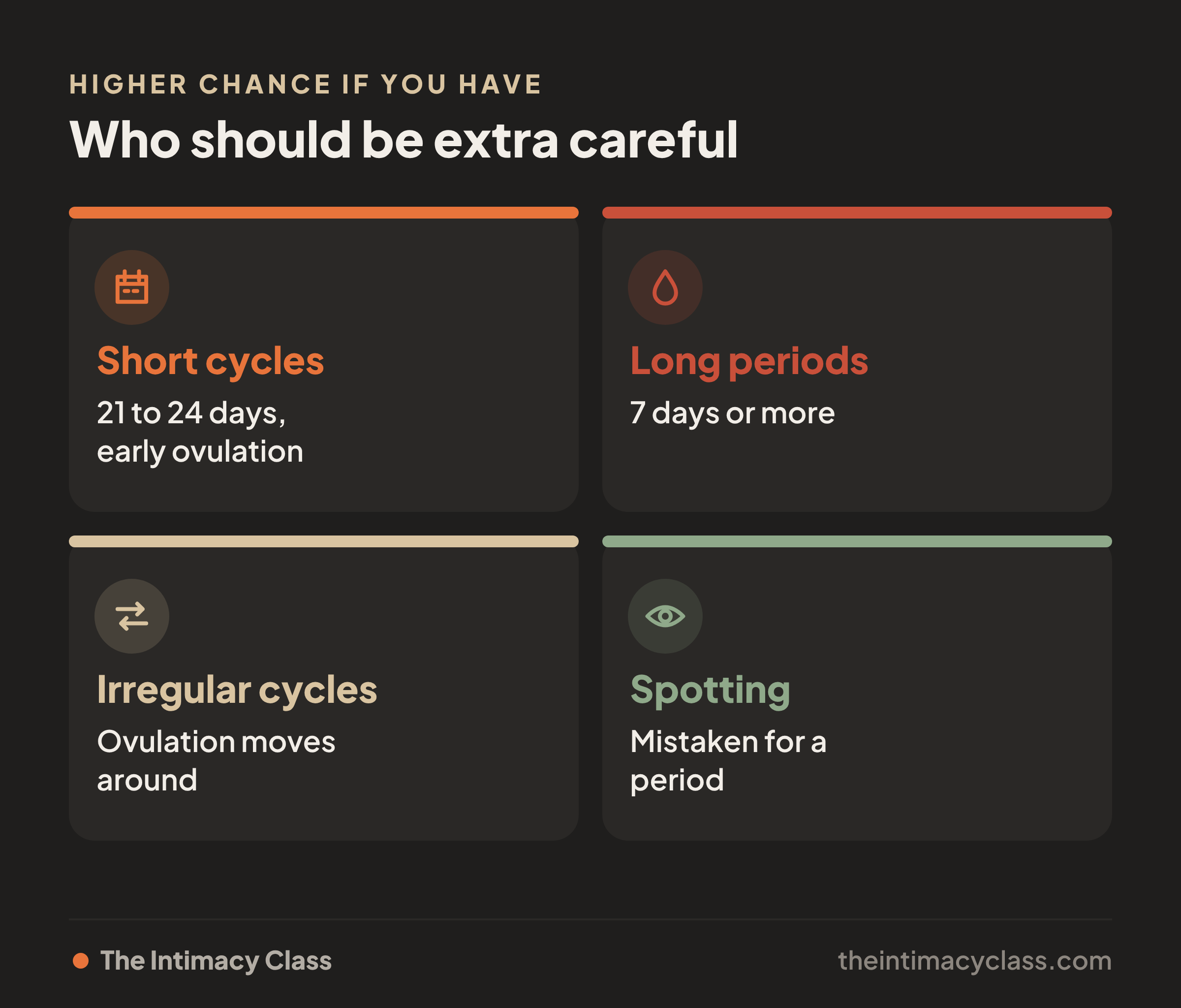
- Short cycles (21 to 24 days): ovulation comes soon after the period ends.
- Long periods (7 days or more): sex late in the period is closer to ovulation.
- Irregular cycles: when ovulation moves around, no day can be predicted.
- Spotting mistaken for a period: some people have light bleeding around ovulation, which is actually the most fertile time.
Myth vs fact
Myth: "Period days are safe days." Fact: No day of the cycle is 100% safe without contraception. Calendar methods alone have a high failure rate, especially with irregular cycles.
What to do if a condom slips or breaks
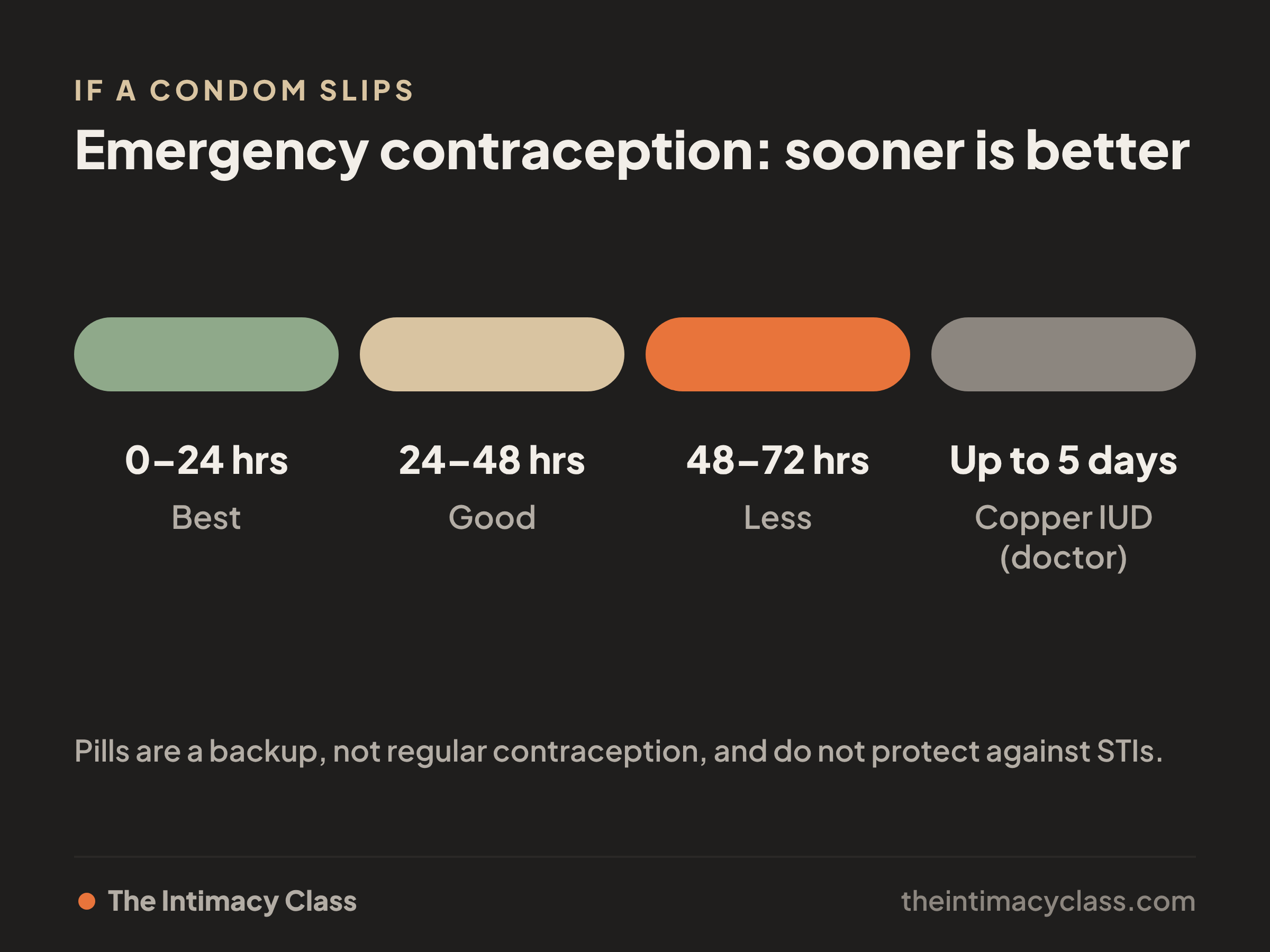
Emergency contraception works best the sooner it is used.
- Emergency contraceptive pills (commonly levonorgestrel, available at chemists in India) work best within 24 hours and are meant for use up to 72 hours (3 days) after unprotected sex. Their effectiveness drops with each passing day.
- A copper IUD, fitted by a doctor within 5 days, is the most effective emergency option and can also be kept as regular contraception.
- Emergency pills are a backup, not a regular method, and they do not protect against STIs.
If you're unsure which option suits you, or you want a regular method that fits your body and routine, a gynaecologist can help. You can find verified gynaecologists on The Intimacy Class and book a private online session directly with them.
How to actually stay protected
- Use a condom from start to finish, every time, on every day of the cycle.
- If you want a long-term method (pills, IUD, implant), talk to a doctor about what fits your health.
- Track your cycle for a few months. An app helps, but it isn't contraception.
- If your period is more than a week late after unprotected sex, take a home pregnancy test. Tests are most accurate from the day your period was due.
When to see a doctor
See a gynaecologist if your period is more than a week late, if bleeding is unusually heavy or painful, or if you're unsure what to do after unprotected sex. Very irregular cycles are also worth checking, because they can point to conditions like PCOS or thyroid issues.
FAQs
Can you get pregnant on the first day of your period? It's very unlikely, but possible in rare cases with very short or irregular cycles. Using protection every day is the only reliable approach.
How long does sperm live inside the body? Up to 5 days in fertile cervical mucus. Most sperm die sooner, but a few can survive long enough to meet an egg.
Is the pull-out method safe during periods? No. Pre-ejaculate can contain sperm, and timing is hard to control. It is not reliable on any day.
Does period blood kill sperm? No. Menstrual blood doesn't stop sperm from moving up into the uterus.
Key takeaways
- Sperm can live for up to 5 days, so period sex can lead to pregnancy.
- Short or irregular cycles raise the chance.
- Condoms every time, and emergency contraception as soon as possible if something slips.
- For personal advice on contraception, talk to a verified gynaecologist.
This article is for education only and isn't a substitute for medical advice.