Safe sex · 7 min read
Anal Sex: Myths, Facts and How to Stay Safe
Anal sex needs lube, condoms, a slow pace and clear consent. Learn the biggest myths, the real risks and the safety basics.

The Intimacy Class Editorial
Anal sex is surrounded by more myths than almost any other topic, and very little accurate information. Some people are curious, some feel pressured, and many don't know the basics of doing it safely. Here's what science says, clearly and without judgement.
The most important rule comes first: pain is a signal, not a step. Anal sex should never be pushed through pain.
How the anus is different from the vagina
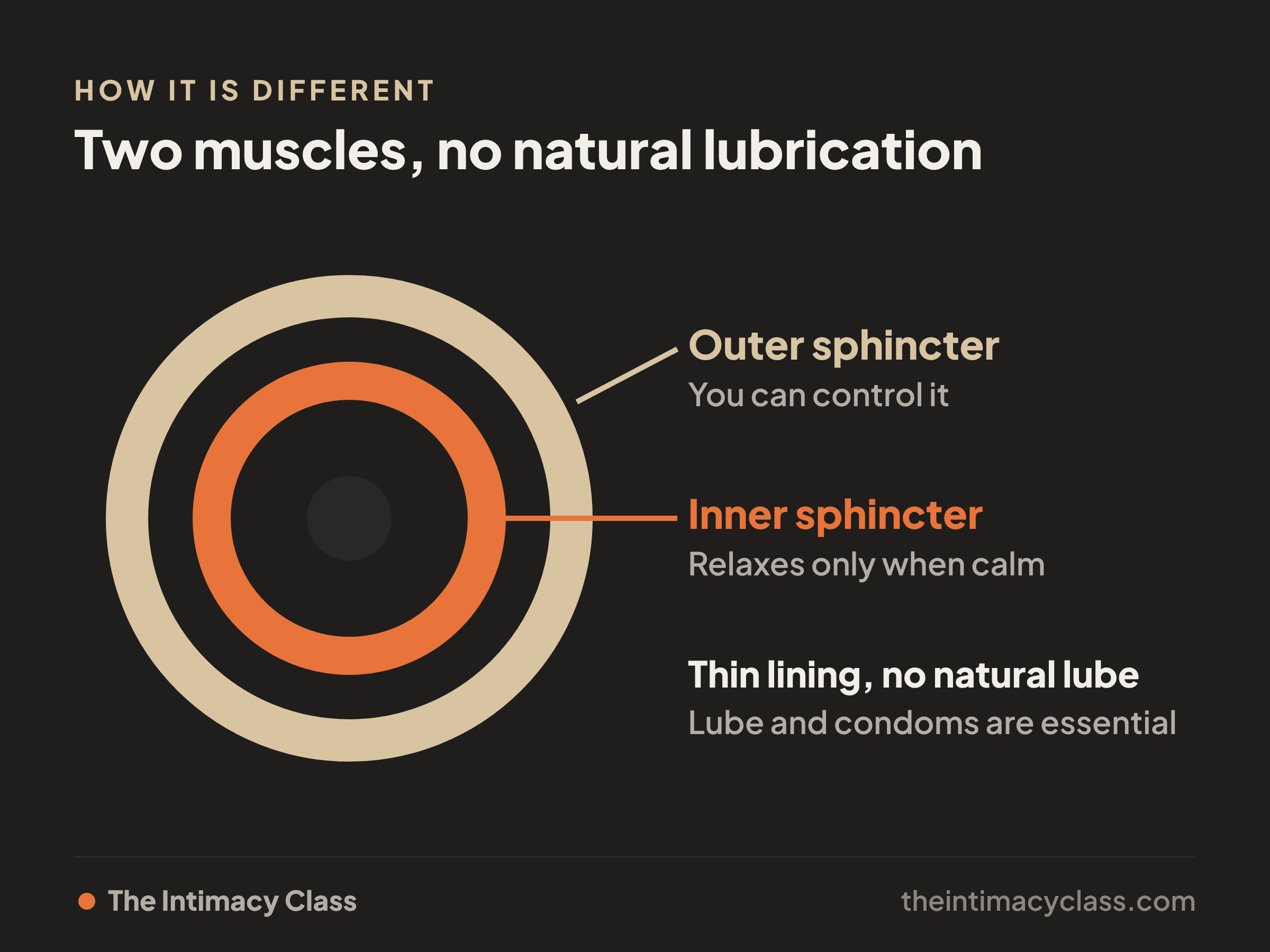
- No natural lubrication. The anus doesn't produce its own lubricant, so lube is essential.
- Two ring-shaped muscles (sphincters). The outer one you can control; the inner one relaxes on its own when you feel calm and aroused. Tension makes it tighten.
- Thin, delicate lining. The tissue inside the rectum tears more easily than vaginal tissue, which is why STIs spread more easily.
Common myths
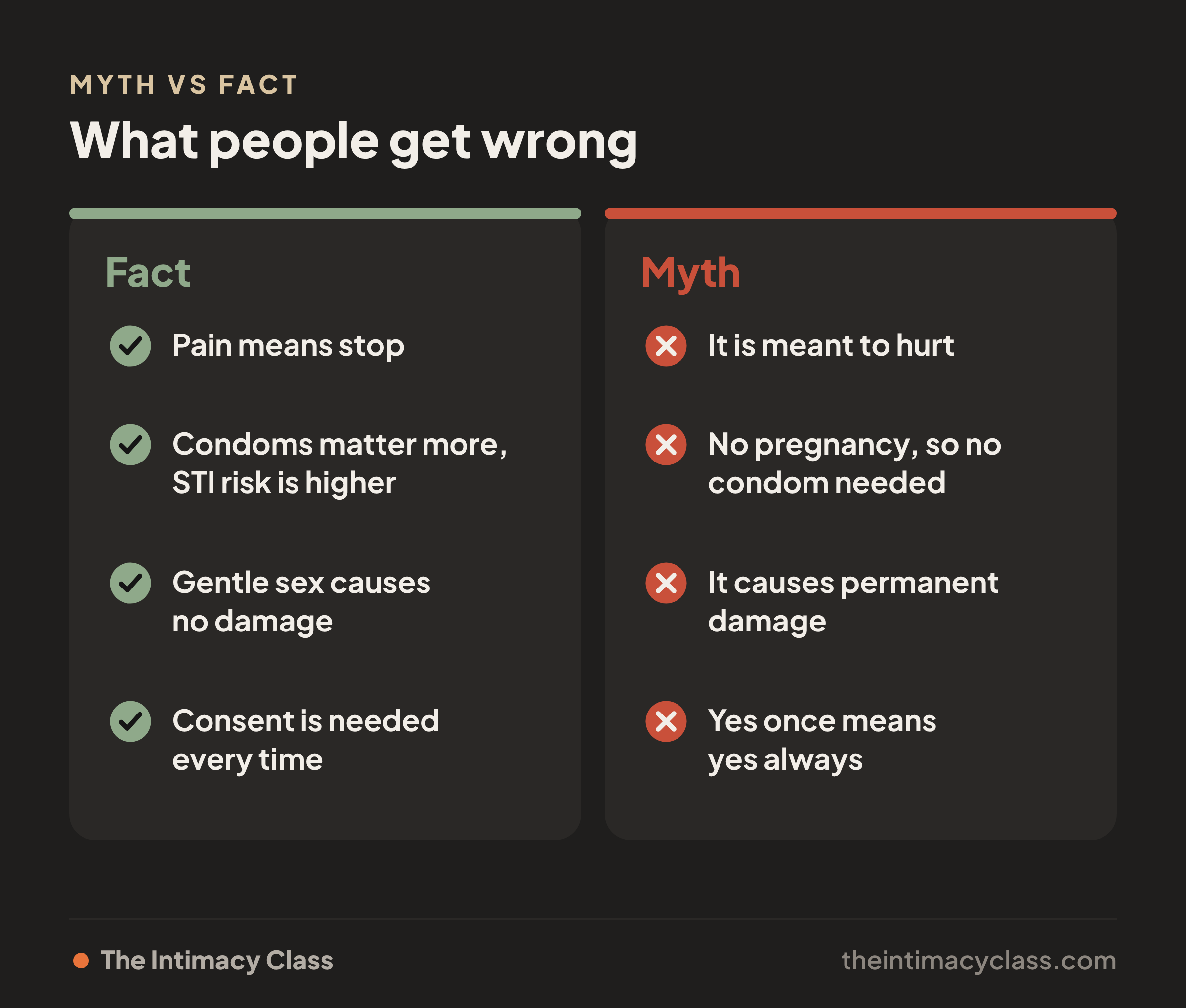
Myth: "It's supposed to hurt the first time." Fact: Discomfort can happen, but sharp pain means stop. Pain usually comes from going too fast, too little lube, or tension.
Myth: "You don't need a condom because you can't get pregnant." Fact: Anal sex has a higher risk of passing on STIs, including HIV, than vaginal sex. Condoms are essential.
Myth: "Anal sex causes permanent damage." Fact: Gentle, consensual anal sex with enough lube doesn't damage the body. Forceful or painful sex can cause small tears (fissures) or aggravate piles.
Myth: "If you agree once, you've agreed every time." Fact: Consent is needed every time, and either partner can stop at any moment.
The safety basics
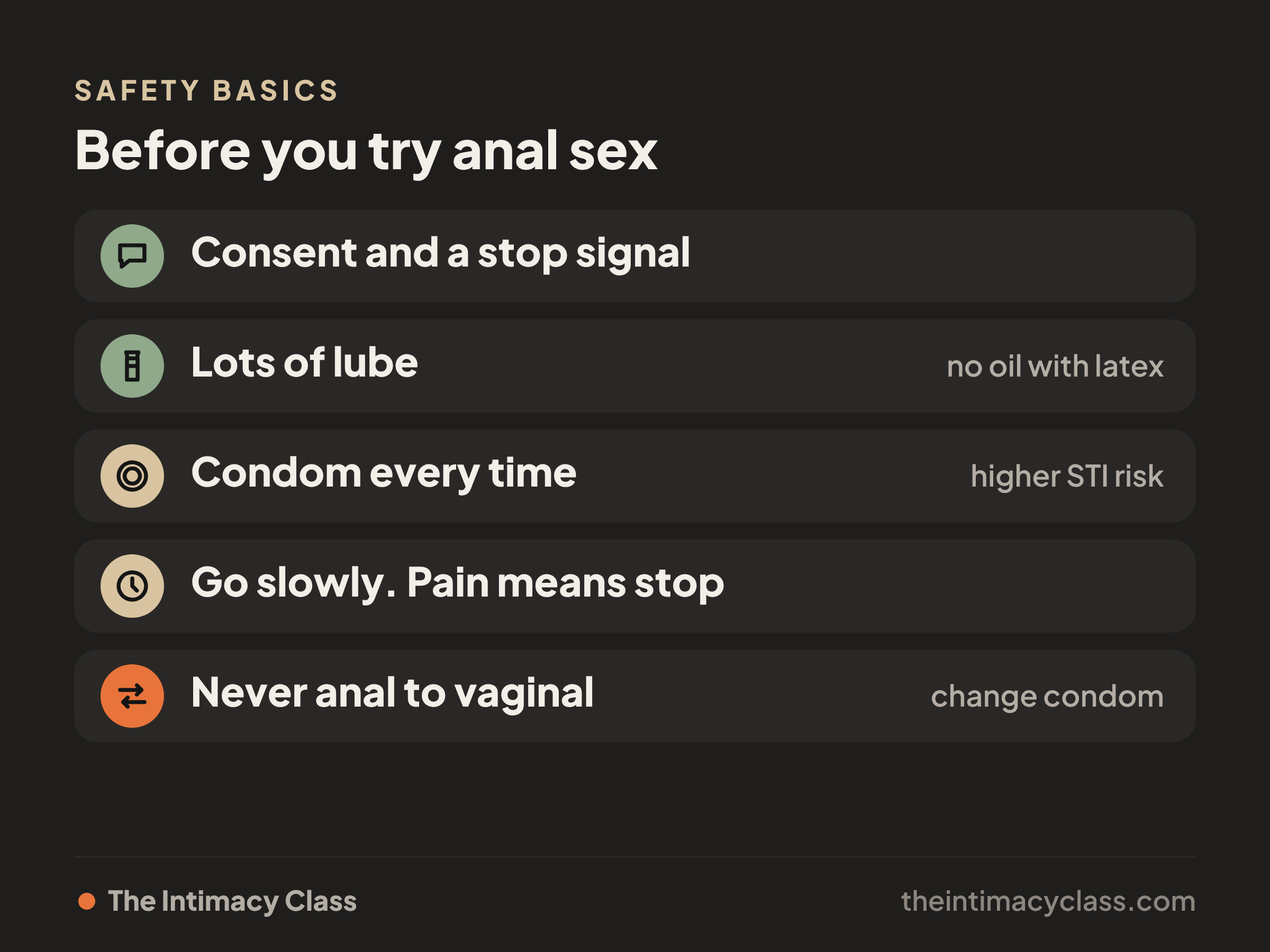
1. Consent and communication. Both partners must genuinely want it. Agree on a word or signal to stop.
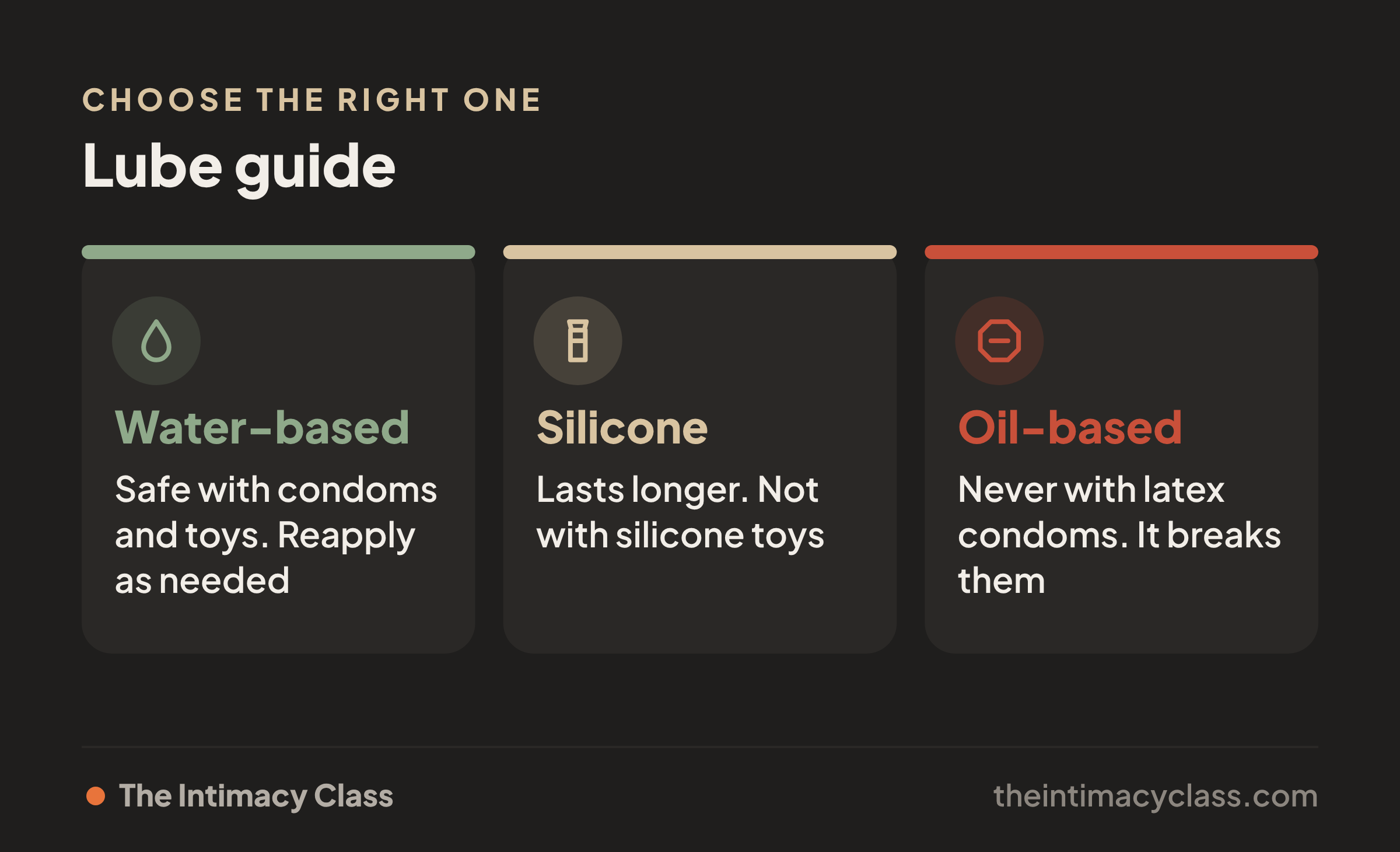
2. Lots of lube. Water-based or silicone-based lube both work well. Never use oil-based products (like coconut oil or petroleum jelly) with latex condoms, because they break the latex.
3. Condom every time. It's the most important protection against STIs.
4. Go slowly. Start with relaxation and foreplay, then a finger, and go further only when it feels comfortable.
5. Never go from anal to vaginal without changing the condom or washing thoroughly. Bacteria from the anus can cause urinary tract infections (UTIs) and vaginal infections.
6. Hygiene. Washing the outer area with water is enough. Frequent enemas or douching can irritate the lining.
Health risks to know about
- STIs: HIV, gonorrhoea, chlamydia, syphilis, HPV and hepatitis B can all spread through anal sex. Regular testing and condoms protect both partners. For people at higher risk of HIV, a doctor can advise about PrEP, a daily medicine that prevents HIV.
- Small tears (fissures): cause sharp pain and bleeding when passing stool.
- Piles (haemorrhoids): can be irritated by rough sex.
When to see a doctor
- Bleeding that doesn't stop, or blood in your stool for more than a day or two
- Pain that continues after sex
- Discharge, itching or sores around the anus
- Fever after sex
If you'd like to talk privately about anal health, pain or STI testing, you can book a session with a verified sexologist or doctor on The Intimacy Class.
FAQs
Is some bleeding normal? A tiny spot can happen from a small tear, but regular bleeding is not normal and should be checked.
Which lube is best for anal sex? A thicker water-based lube or a silicone lube. Silicone lasts longer but shouldn't be used with silicone toys.
Can you get HIV from anal sex? Yes. Receptive anal sex carries the highest HIV risk of any sexual activity, which is why condoms and testing are essential.
Key takeaways
- Pain is a signal to stop, not something to push through.
- Lube, a condom, a slow pace and clear consent are the basics.
- Never go from anal to vaginal without changing the condom.
- For any pain, bleeding or STI worries, speak to a verified expert.
This article is for education only and isn't a substitute for medical advice.